Conditions We Treat
Massage for Plantar Fasciitis & Heel Pain in NYC
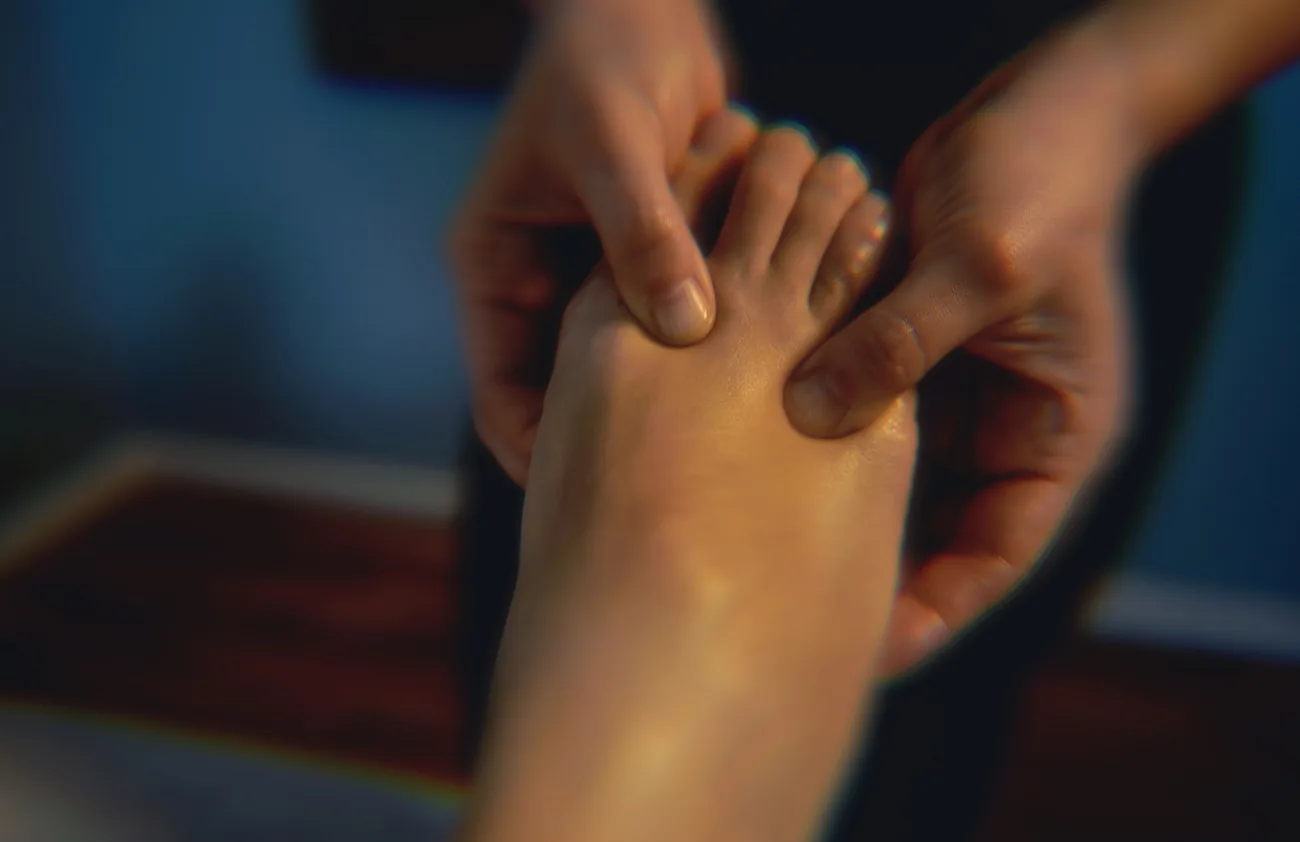
Plantar fasciitis and heel pain can make every step feel sharp, tight, or tender—especially during those first few steps in the morning. Our licensed medical massage therapists help restore foot and ankle mobility, reduce tension through the entire lower‑leg and upper‑leg chains and rebalance the mechanics that drive chronic heel pain.
- Available in FiDi & Midtown West – open 7 days a week
Causes
What’s Going On With Plantar Fasciitis & Heel Pain?
- Plantar fasciitis occurs when the fascia along the bottom of the foot becomes irritated from overload, poor foot mechanics, or upstream movement restrictions.
- Heel spurs can form after chronic pulling from the plantar fascia attachment over time.
- Plantar fasciitis affects up to 10% of the population, making it one of the most common causes of heel pain (StatPearls 2024).
- The biggest driver is limited ankle dorsiflexion and subtalar mobility, which forces the plantar fascia to absorb excessive load.
- Tight calves, rigid feet, hip imbalances, prior ankle sprains, and even rib or pelvic restrictions can all shift pressure into the heel.
At Bodyworks DW, we treat plantar fasciitis and heel pain as whole-chain movement issues, not just foot problems. Restoring mobility from the ribs through the hips, knees, ankles, and toes reduces strain on the plantar fascia and supports more natural, comfortable walking.
Related conditions: See also our Ankle & Foot Pain, Shin Splints, and Knee Pain pages.
How we treat
How Bodyworks DW Treats Plantar Fasciitis & Heel Pain
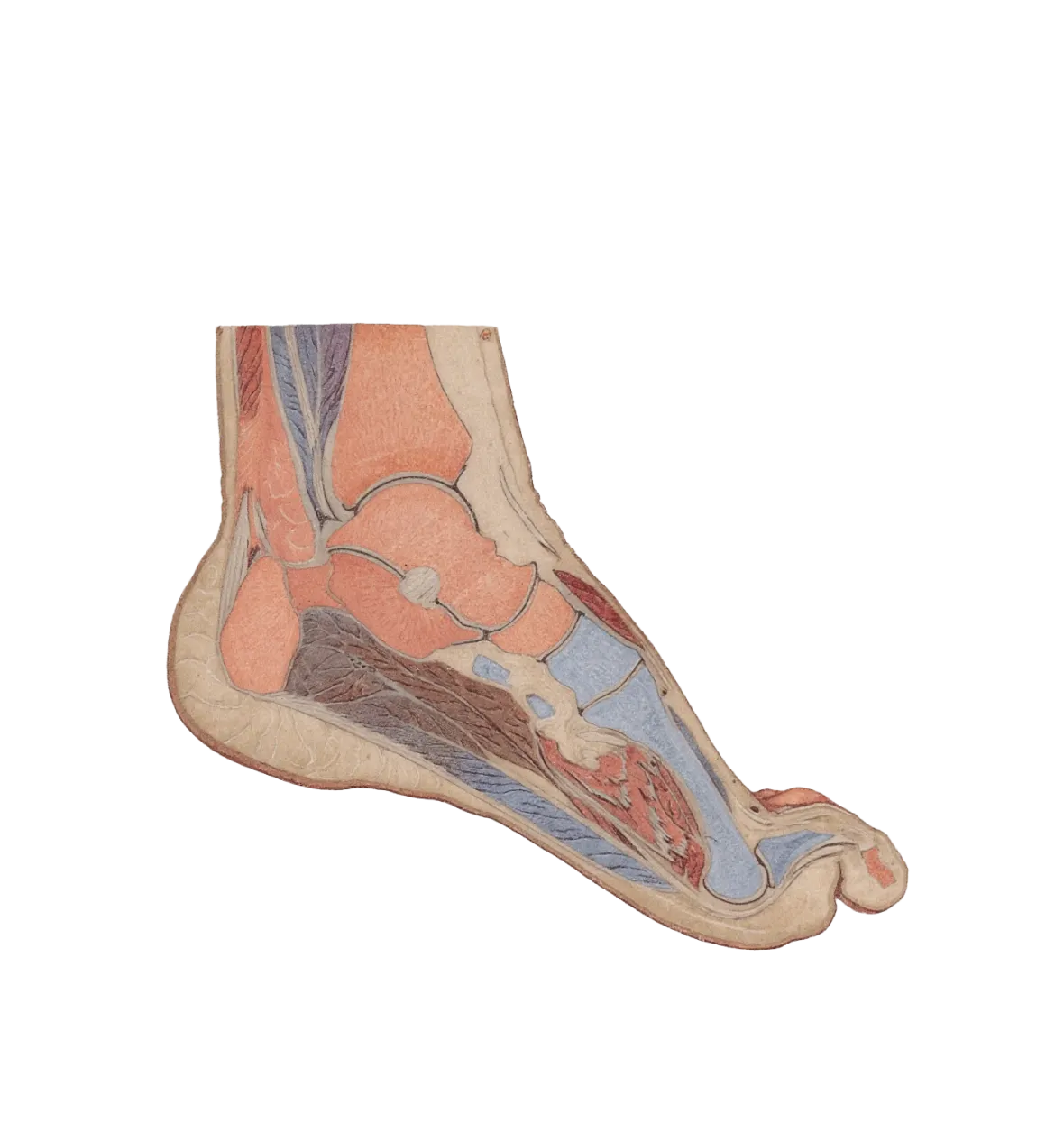
Plantar fasciitis is rarely just a foot issue—restricted ankle and calf mechanics are the most common root causes, forcing the plantar fascia to overstretch at its attachment on the heel. Anatomy Plate (Braus, 1921)
Whole-Body Evaluation
We assess ankle dorsiflexion, subtalar mobility, calf tension, hip balance, rib rotation, and gait mechanics to identify what’s actually overloading the heel.
Targeted Myofascial & Deep Tissue Work for Relief
Session 1 focuses on releasing calves, Achilles tendon, plantar fascia, peroneals, tibialis posterior, and hip stabilizers. We also address ankle-joint mobility to reduce strain on the plantar fascia. Our approach draws from the techniques taught in our Foot & Ankle and Plantar Fasciitis CEU courses.
Addressing Heel Spurs
Heel spurs themselves don’t need or benefit from direct treatment — instead, we reduce the chronic tension patterns that create the spur in the first place. Giving slack to the plantar fascia pulling on the spur will usually result in a noticeable reduction of pain.
Progressive Plan That Builds on Each Session
As mobility improves, we integrate hips, ribs, foot arches, and gait mechanics to support effortless walking and long-term relief.
Therapists for Plantar Fasciitis & Heel Pain
Thom
Lead Massage Therapist

Christopher
Lead Massage Therapist

Nick
Lead Massage Therapist
Jessica
Senior Massage Therapist

Atsuhiko
Lead Massage Therapist
David
Owner/Founder

Andrew
Lead Massage Therapist

Adee
Lead Massage Therapist

Jovaughn
Senior Massage Therapist

Nichole
Lead Massage Therapist

Kelly
Lead Massage Therapist

Ben
Lead Massage Therapist

Leela
Lead Massage Therapist

Ann
Lead Massage Therapist

Joao
Senior Massage Therapist
Briana
Lead Massage Therapist

Rebecca
Lead Massage Therapist

Shiho
Lead Massage Therapist

Yvonne
Lead Massage Therapist

Hannah
Senior Massage Therapist

Michelle
Lead Massage Therapist

Jessamyn
Lead Massage Therapist
Book now
Book your Session for Plantar Fasciitis & Heel Pain
What to Expect
A Progressive Plan
Session 1
Release calves, plantar fascia, and ankle restrictions for an immediate reduction in heel tension. Expect easier first steps and noticeably less sharpness.
Sessions 2–4
Improve foot and ankle mechanics with hip, rib, and gait integration to ease strain on the fascia.
Sessions 5–8+
Reinforce whole‑body alignment—from the feet up through the knees, hips, ribs, shoulders, and neck—to maintain pain‑free walking and help prevent recurrence.
Ready to start feeling better?
See times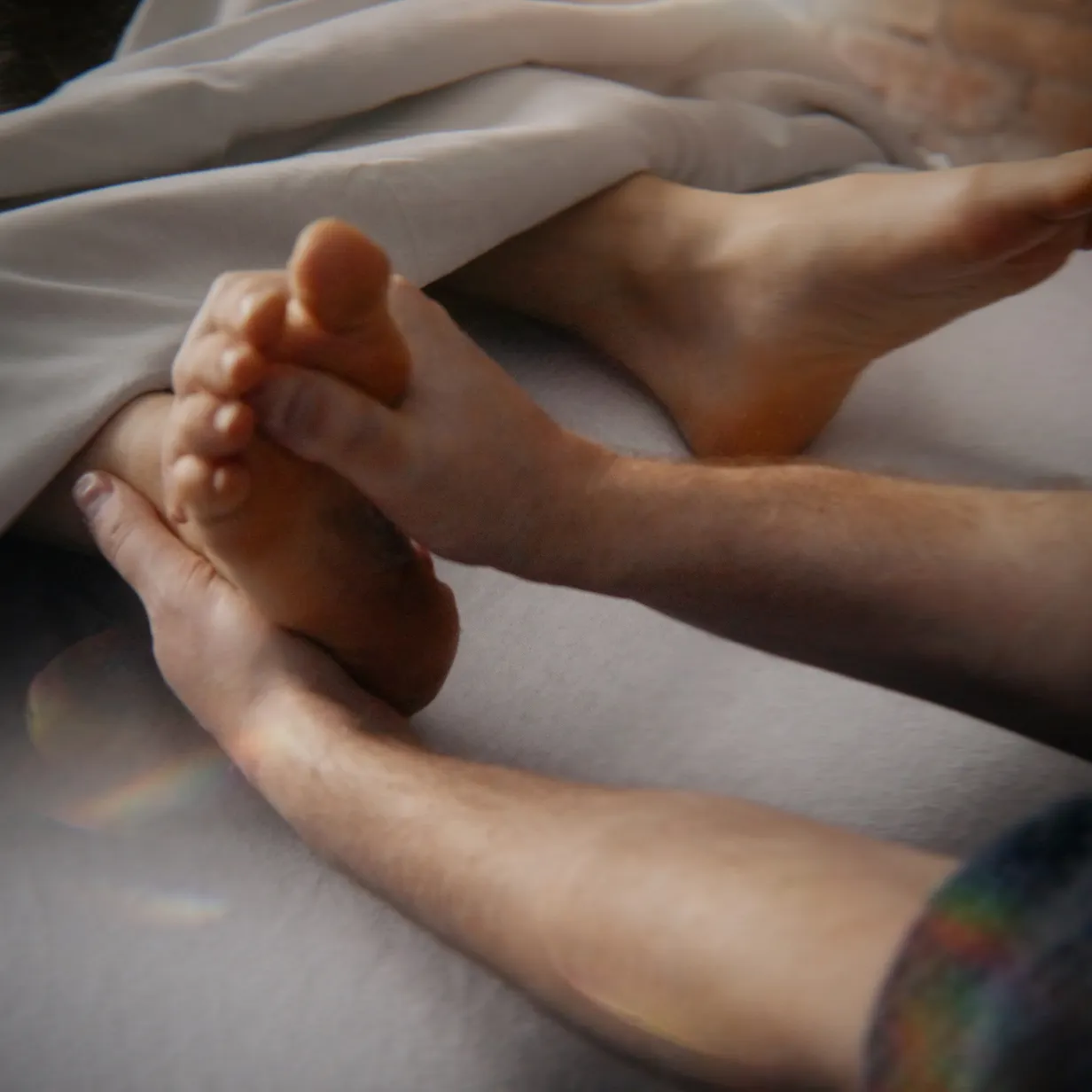
Care
Home Care That Helps Between Sessions
We’ll teach simple, effective strategies such as:
- Calf and Achilles mobility resets
- Tibialis Posterior self release techniques
- Ankle dorsiflexion drills
- Foot‑intrinsic strengthening and arch‑activation
- Use of braces and kinesio tape for extra support while healing

Testimonial
What Our Clients Say
Pricing & wellness wallets
Book now. Pay after.
Or load a Wellness Wallet and get extra credit.
Book now · pay after
Book your session
No prepay. A card on file holds your time; you pay after your session.
Senior
Lead
Owner
60 minutes
$175
with a Senior Therapist
90 minutes
$250
with a Senior Therapist
Wellness Wallets
Load credit, get extra
Use it on any 60- or 90-min session at either studio.
Recommended
$800
$920
Covers ~3–5 sessions
+$120
$1,400
$1,650
Covers ~5–10 sessions
+$250
Before your first visit only
$550
$600
~3 sessions with any Senior or Lead therapist
+$50

Frequently Asked Questions
Have more questions? Get in touch
Why does plantar fasciitis hurt most in the morning?
Overnight, the plantar fascia tightens. When you first step out of bed, it suddenly stretches — triggering sharp pain. Restoring calf and ankle mobility reduces this morning spike.
Do heel spurs cause pain?
Not directly. Heel spurs are usually a sign of long-term plantar fascia tension — we treat the tension, not the spur.
Do I need imaging or a doctor's release before receiving massage?
No. Under NYS Title VIII licensure (see NY Board of Education FAQ #28), massage therapists can assess whether your symptoms are safe for massage. We refer out only when necessary.
What makes Bodyworks DW’s approach different?
We treat plantar fasciitis as a full-chain imbalance — addressing hips, ankles, ribs, and gait mechanics, not just the foot.
How many sessions will I need?
Many clients notice improvement in 1–3 sessions, with deeper recovery over 5–8 sessions.
Are there precautions for post‑surgical knee massage?
Yes. Acute inflammation, nerve involvement, or medical conditions affecting tissue integrity may require modified pressure.
Full list: NYS Massage Therapy Precautions
Resources
Explore our Relief Library

Guides
Massage for Sports Injuries: What is Scar Tissue and How Can Massage Help As We Age?
David Weintraub
- Oct 14, 2020