
Conditions We Treat
Massage for Thoracic Outlet Syndrome Relief in NYC
Tingling, numbness, or aching in your arm or hand could be caused by Thoracic Outlet Syndrome (TOS)—a condition where nerves or blood vessels are compressed between the neck, collarbone, and first rib. Our licensed medical massage therapists specialize in releasing these restrictions safely and effectively.
- Available in FiDi & Midtown West – open 7 days a week
Causes
What’s Going On With Thoracic Outlet Syndrome?
- Thoracic Outlet Syndrome (TOS) occurs when nerves or blood vessels traveling from the neck to the arm are compressed by tight muscles, fascia, or misalignment around the collarbone and upper ribs.
- Prevalence estimates range from 3 to 80 cases per 1,000 people, and over 90% of diagnosed cases are neurogenic (StatPearls–NIH 2015). Because neurogenic TOS is often missed or misdiagnosed, true rates are likely higher.
- Common symptoms include tingling or numbness in the arm or hand, grip weakness, and a heavy or painful feeling in the neck or shoulder—often worse with prolonged sitting or overhead activity.
- Causes include repetitive strain, poor posture, previous injuries (such as whiplash or shoulder trauma), or anatomical variations like an elevated first rib.
At Bodyworks DW, we know TOS is rarely just a neck or shoulder problem. It reflects how the entire upper body moves and stabilizes—from the pelvis and diaphragm to the ribs, collarbone, and head. Our work reduces compression and restores balanced movement so your arm and neck can function without symptoms.
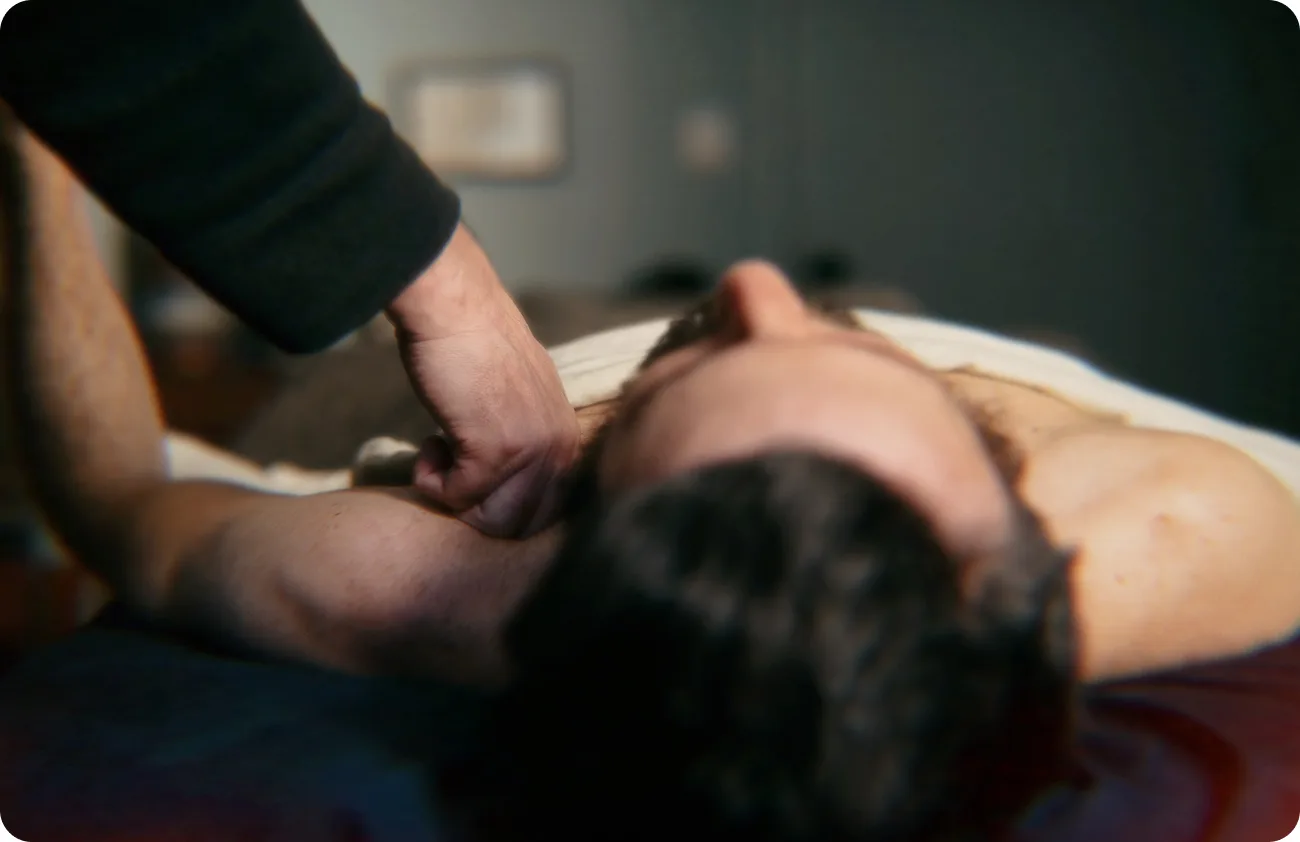
Related conditions: See also our Cervical Disc Herniation & Stenosis, Neck Pain, and Shoulder Pain pages
How we treat
How Bodyworks DW Treats Thoracic Outlet Syndrome
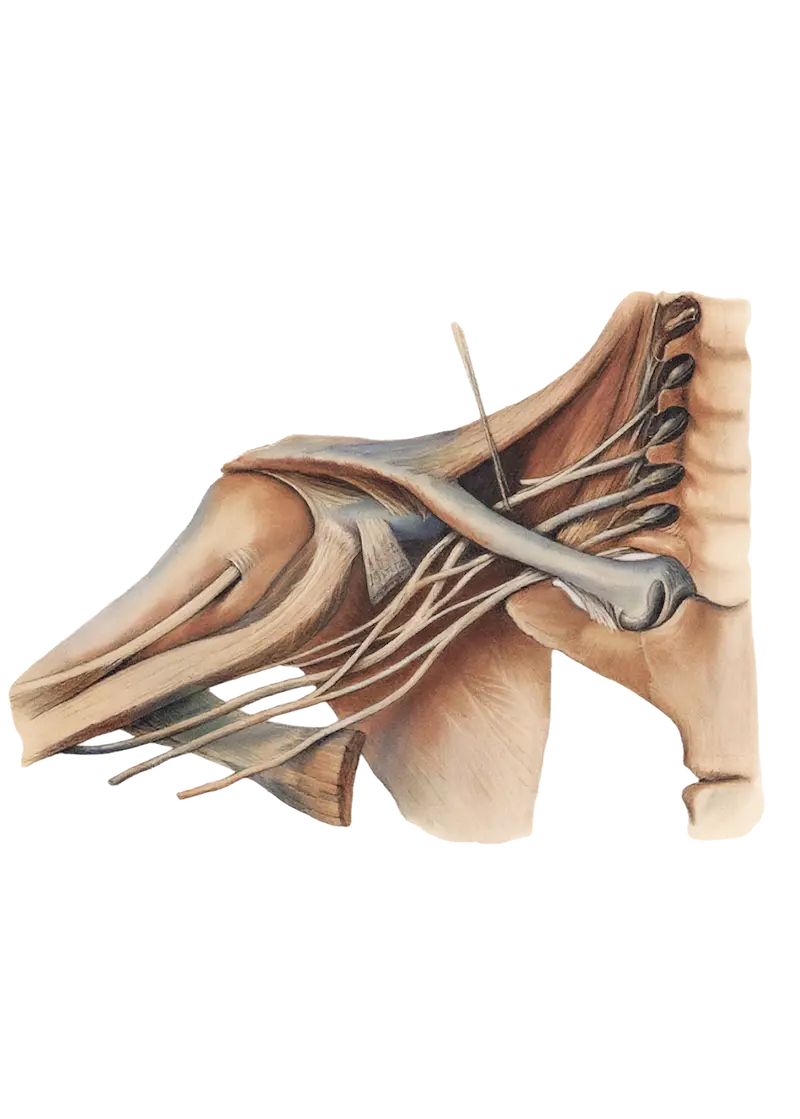
Cutaway showing cervical spine and nerve roots leading into the shoulders and arms. With TOS, the same brachial nerves that might get compressed by cervical disc herniations at the spine, instead get compressed between the clavicle and first rib. Anatomy Plate (Grant 1962)
Whole-Body Evaluation
We begin by assessing posture, breathing mechanics, and shoulder positioning to pinpoint where compression is occurring—whether between the scalenes, under the collarbone, or at the pectoralis minor.
Targeted Myofascial & Deep Tissue Work for Nerve Decompression
We first release restrictions in the ribcage, thoracic spine, abdominals, and hips to help the shoulder girdle relax and reduce nerve compression. Then we work directly on the scalenes, upper ribs, clavicle, and pecs to restore space for the nerve and vascular bundle. Pressure and techniques are always adapted to your comfort and medical history.
Integration of Advanced Techniques from Our Shoulder CEU Course
Our therapists are trained in specialized methods to reposition the shoulder girdle and mobilize the shoulder joint, improving fascial glide and reducing nerve entrapment patterns that extend from the neck into the shoulder and arm.
Progressive Plan That Builds on Each Session
Once local compression improves, we expand our work to rebalance posture across the entire body. This whole-body approach ensures that each joint plane supports the next for long-term stability.
What to Expect
A Progressive Plan
Session 1
Focus on identifying the primary compression points and easing tension through the neck, shoulder girdle, and chest for immediate symptom relief.
Sessions 2–4
Expand treatment into the ribs, spine, and diaphragm to reduce recurring compression and improve posture and breathing mechanics.
Sessions 5–8+
Integrate full-body alignment—linking the feet, knees, hips, ribs, shoulders, neck, and jaw—to prevent recurrence and build long-term resilience.
Ready to start feeling better?
Book a session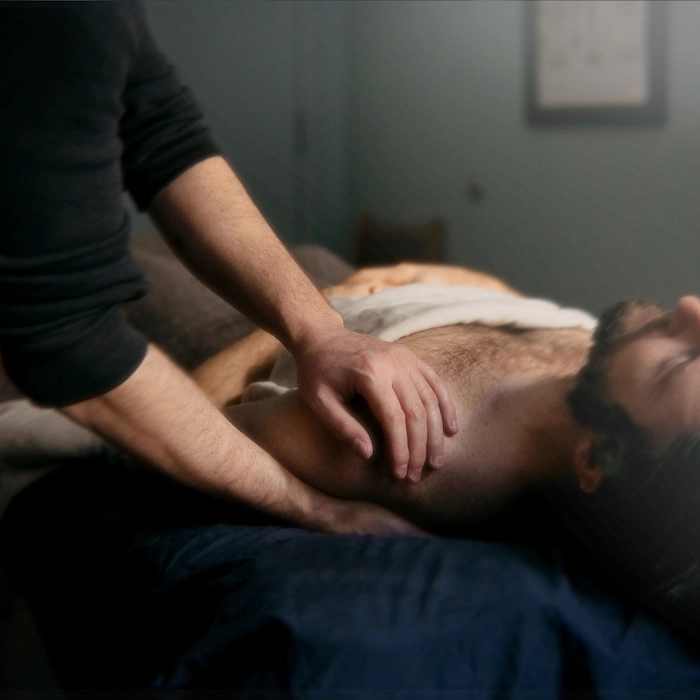
Care
Home Care That Helps Between Sessions
We’ll teach you simple, effective self-care techniques—like scalene and pec stretches, diaphragmatic breathing, and posture resets—to maintain space through the thoracic outlet and keep symptoms from returning.
For example, here’s a video we provide once symptoms improve that will help stabilize the shoulder in the new position and keep symptoms from returning (do not do when TOS is acute)

Testimonial
What Our Clients Say
Pricing & wellness wallets
Book now. Pay after.
Save up to 20%.
Pay after your session—no prepay.
New here? Select “New Client Massage” to get $25 off your first visit.
Add a Wellness Wallet before your first session or within 7 days after to get up to 20% bonus credit.
START HERE
Book your session
No prepay—card on file to hold; pay after your session. New here? Choose “New Client Massage” when booking to get $25 off your first visit with select therapists.
Senior
Lead
Owner
60 minutes
$160
/ with Senior Therapist
90 minutes
$230
/ with Senior Therapist
First wallet bonus
Save with Wellness Wallets
First time buying a Wellness Wallet? You qualify for our best bonus. New to Bodyworks? Buy before your first session to use it on that visit.
$800
Get $120 bonus
Covers ~3–5 sessions
15% bonus credit
$1400
Get $250 bonus
Covers ~5–10 sessions
17.5% bonus credit
$3000
Get $600 bonus
Covers ~12–22 sessions (Annual plan)
20% bonus credit

Frequently Asked Questions
Have more questions? Get in touch
Is massage safe for Thoracic Outlet Syndrome?
Yes—when performed by trained medical massage therapists. We avoid compressing inflamed nerves or blood vessels directly and instead focus on releasing tension in surrounding areas to relieve pressure safely.
Do I need imaging before receiving massage?
No. Under NYS Title VIII licensure (see NY Board of Education FAQ #28), massage therapists can assess whether your symptoms are safe for massage. We refer out only when necessary.
What makes Bodyworks DW’s approach different?
Our work goes beyond treating the neck and shoulders. We integrate ribcage, diaphragm, and postural work for long-lasting results. Our therapists also use techniques taught in our Head, Neck & Jaw and Myofascial Release Techniques for the Shoulders CEU courses to address deeper structures that influence nerve mobility.
How many sessions will I need?
Most clients experience relief after 2–4 sessions, with longer-term improvement and postural balance achieved within 6–8 sessions.
Are there precautions for thoracic outlet syndrome massage?
Yes — recent injuries, acute inflammation, fever/illness, or medications affecting tissue integrity require caution.
Full list: NYS Massage Therapy Precautions