
Conditions We Treat
Massage for Tendonitis & Chronic Tendon Pain in NYC
Tendonitis—more accurately called tendinopathy—is one of the most common causes of persistent joint pain. Whether it’s your shoulder, elbow, knee, Achilles, or wrist, our licensed medical massage therapists help reduce overload, restore clean mechanics, and improve how force travels through the entire kinetic chain.
- Available in FiDi & Midtown West – open 7 days a week
Causes
What’s Going On With Tendonitis?
- Tendonitis refers to irritation or overload of a tendon, often from repetitive strain, poor mechanics, or sudden increases in activity.
- Most chronic cases are not true inflammation, but tendinopathy—a breakdown in tendon structure from cumulative overload.
- Tendinopathy is extremely common in both athletes and non-athletes, affecting up to 30–50% of recreational athletes each year, and frequently appearing in the Achilles tendon, patellar tendon, rotator cuff, and elbow. (StatPearls–NIH 2025)
- Tendons become painful when they are forced to absorb more load than surrounding muscles and joints can distribute.
- Restricted mobility in nearby joints (hips, ribs, shoulders, ankles) often shifts force directly into the tendon.
- Without correcting the movement pattern that caused it, tendon pain frequently returns.
At Bodyworks DW, we treat tendon pain as a load-distribution problem, not just a local sore spot. Restoring balanced movement in joints above and below the tendon reduces strain and allows tissue to recover.
In this video, David Weintraub, LMT talks about one of the most common forms of tendonitis, carpal tunnel syndrome, including how it forms and how massage therapy can help.
Related conditions:
See also our Plantar Fasciitis, Elbow Pain, Shoulder Pain, and Knee Pain pages.
How we treat
How Bodyworks DW Treats Tendonitis
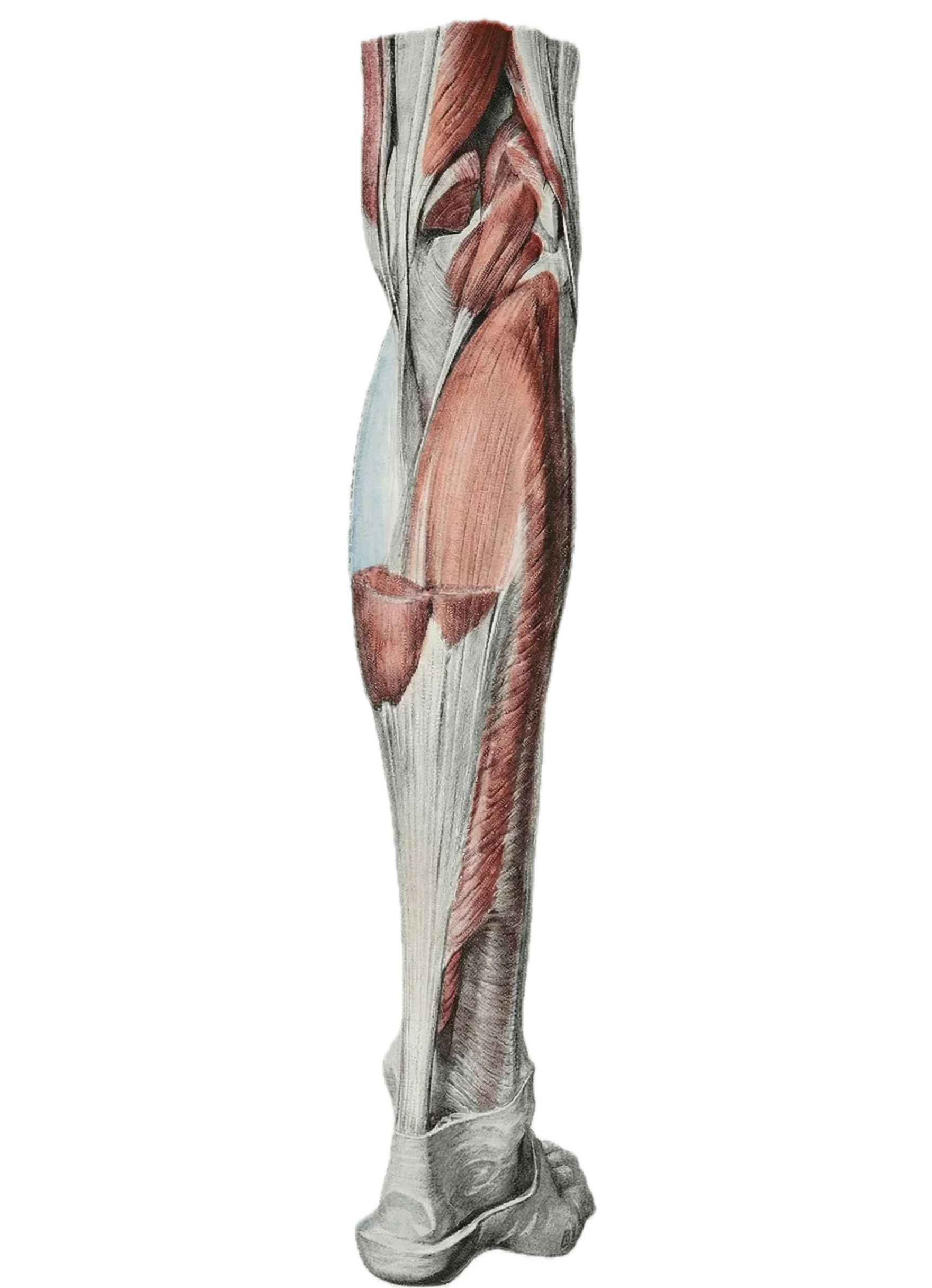
Cutaway view of the posterior knee and lower leg, highlighting the major tendons, including the large Achilles tendon at the back of the heel. Restrictions in the ankle, knee, or hip can increase strain on the Achilles during movement. Over time, this excess load may contribute to microtearing, irritation, and chronic tendon pain. Anatomy Plate (Braus 1921)
Whole-Body Evaluation
We assess joint mobility, movement sequencing, rib mechanics, and compensatory patterns that increase tendon stress.
Creating Slack Before Local Work
Sessions begin by improving mobility in surrounding joints—hips, ribs, spine, shoulders, ankles—before addressing the tendon region directly.
Targeted Myofascial & Deep Tissue Work
We release tight muscle compartments feeding the tendon, improve fascial glide, and restore more balanced tension along the kinetic chain.
Tendon-Sensitive Approach
We avoid aggressive direct pressure on acutely irritated tendons and instead focus on improving circulation and reducing overload.
Progressive Plan That Builds on Each Session
As mechanics improve, we integrate whole-body alignment to prevent recurrence and support long-term tendon resilience.
What to Expect
What to Expect — A Progressive Plan
Session 1
Reduce muscle guarding around the affected tendon and restore mobility in nearby joints. Expect less pulling, less sharpness, and improved range of motion.
Sessions 2–4
Improve load-sharing through the chain, reducing repetitive stress on the tendon.
Sessions 5–8+
Reinforce whole-body mechanics—feet, knees, hips, ribs, shoulders, and spine—to maintain symptom relief and prevent flare-ups.
Ready to start feeling better?
Book a session
Care
Home Care That Helps Between Sessions
We emphasize sustainable strategies rather than overwhelming exercise lists:
- Gentle eccentric loading (when appropriate)
- Joint mobility resets above and below the tendon
- Soft-tissue self-release techniques
- Gait or arm-swing retraining
- Contrast hot and cold bathing to speed recovery

Testimonial
What Our Clients Say
Pricing & wellness wallets
Book now. Pay after.
Save up to 20%.
Pay after your session—no prepay.
New here? Select “New Client Massage” to get $25 off your first visit.
Add a Wellness Wallet before your first session or within 7 days after to get up to 20% bonus credit.
START HERE
Book your session
No prepay—card on file to hold; pay after your session. New here? Choose “New Client Massage” when booking to get $25 off your first visit with select therapists.
Senior
Lead
Owner
60 minutes
$160
/ with Senior Therapist
90 minutes
$230
/ with Senior Therapist
First wallet bonus
Save with Wellness Wallets
First time buying a Wellness Wallet? You qualify for our best bonus. New to Bodyworks? Buy before your first session to use it on that visit.
$800
Get $120 bonus
Covers ~3–5 sessions
15% bonus credit
$1400
Get $250 bonus
Covers ~5–10 sessions
17.5% bonus credit
$3000
Get $600 bonus
Covers ~12–22 sessions (Annual plan)
20% bonus credit

Frequently Asked Questions
Have more questions? Get in touch
Is tendonitis the same as inflammation?
Acute tendonitis involves inflammation, but most chronic cases are tendinopathy—degenerative changes from overload rather than active inflammation.
Can massage cure tendonitis?
Massage cannot repair structural tendon degeneration, but it can significantly reduce strain, improve mobility, and support your body’s own repair and recovery when combined with proper loading strategies.
What makes Bodyworks DW’s approach different?
We treat the entire kinetic chain—restoring balanced movement and load distribution—rather than focusing only on the painful tendon.
How many sessions will I need?
Many clients notice improvement in 2–4 sessions, with deeper structural changes over 5–8+ sessions
Are there precautions?
Yes. Acute tears, severe inflammation, or systemic conditions require modified pressure or referral.
Full list: https://www.op.nysed.gov/professions/massage-therapy/precautions-massagebodywork-therapy