
Conditions We Treat
Massage for Shoulder Pain & Rotator Cuff Injury in NYC
Whether it’s a dull ache, sharp pinch when lifting your arm, or lingering weakness after an injury, shoulder pain often reflects deeper patterns of imbalance throughout the body. Our licensed medical massage therapists specialize in restoring movement, reducing inflammation, and helping the shoulder function naturally again.
- Available in FiDi & Midtown West – open 7 days a week
Causes
What’s Going On With Shoulder Pain & Rotator Cuff Injuries?
- The shoulder is the body’s most mobile joint—and one of the most injury-prone. Rotator cuff tears are very common: ~30% of adults over 60 and 60%+ over 80 have one, painful or not (NCBI Bookshelf – NIH).
- The shoulder actually relies on two joints working together: the shoulder girdle (scapula + collarbone) and the shoulder joint (humerus in the socket). Restrictions in one disrupt the other.
- Rotator cuff irritation often happens when its small stabilizers overwork to compensate for tight lats, traps, or other larger shoulder-girdle muscles.
- Another common cause is shoulder impingement, where a narrowed space under the acromion pinches the rotator-cuff tendons or bursa.
- Postural patterns like forward head posture, rib stiffness, or a rounded upper back can compromise shoulder mechanics.
- Even hips, ribs, feet, and ankles influence how the shoulder moves and bears load, especially in repetitive sports like swimming or throwing.
At Bodyworks DW, we view shoulder and rotator cuff pain as part of a whole-body movement pattern—not just a local tear. We restore balanced mechanics across the chain so the shoulder can move cleanly and without strain.
Related conditions: See also our Neck Pain, Thoracic Outlet Syndrome, and Upper Back Pain pages.
How we treat
How Bodyworks DW Treats Shoulder Pain & Rotator Cuff Injury
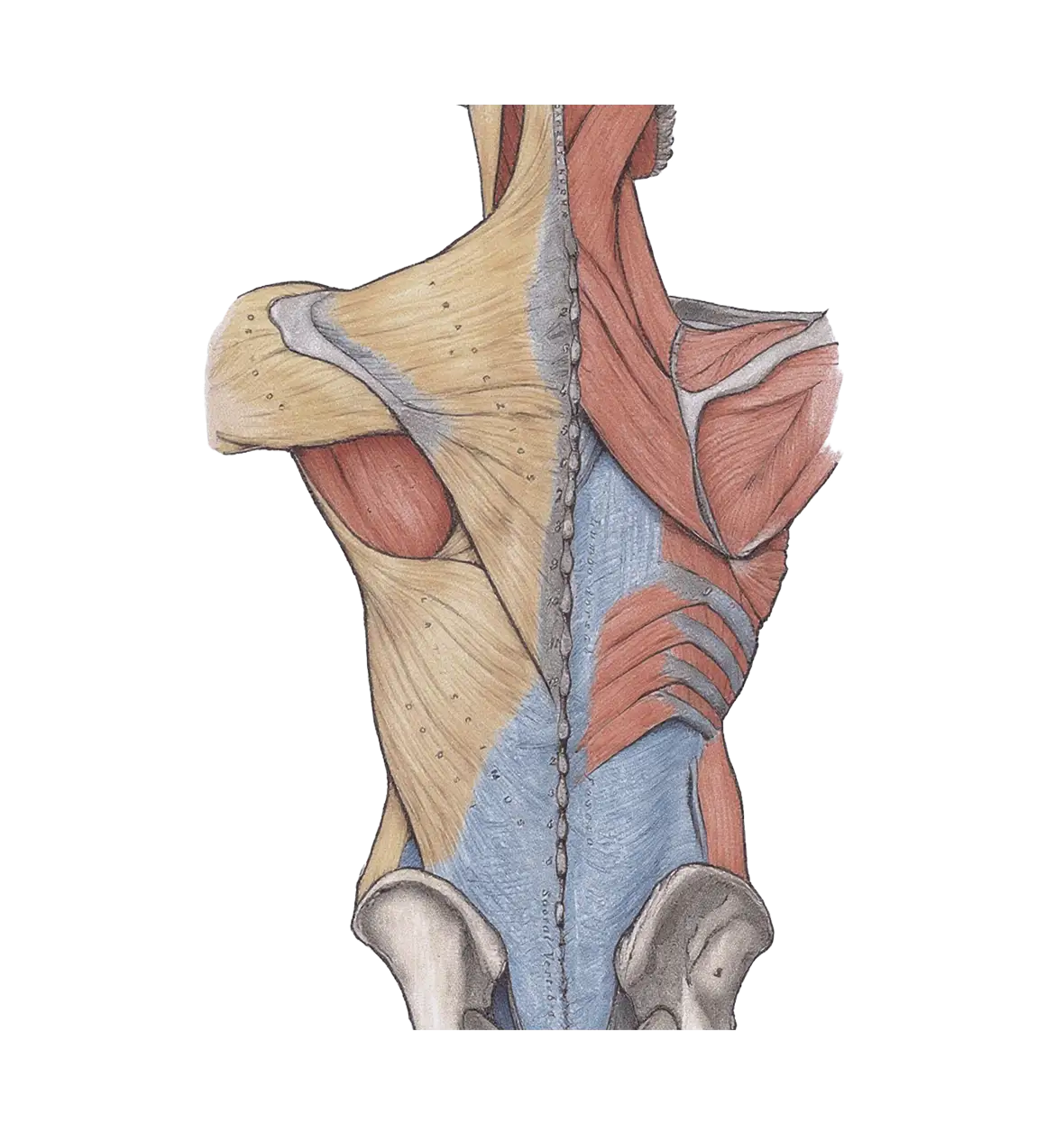
The shoulder relies on balanced coordination between the rotator cuff, ribcage, neck, and upper back — imbalances in any of these areas can overload the joint. Anatomy Plate (Gray’s, 1918)
Whole-Body Evaluation
We assess posture, breathing mechanics, and shoulder movement patterns to identify what’s actually driving the injury — whether it’s rib restriction, neck tension, diaphragm tightness, lower‑body asymmetry, or a combination of these.
Targeted Myofascial & Deep Tissue Work for Realignment
Session 1 starts by creating slack in the major tension patterns leading into the shoulder—ribs, hips, diaphragm, pecs, and lats. This sets the stage for easier, more effective local work. In the second half of the session, we address the smaller stabilizing muscles of the shoulder using techniques adjusted to your pain tolerance.
Progressive Plan That Builds on Each Session
Over the following sessions, we integrate the entire shoulder complex with surrounding regions — ribs, neck, spine, hips, and even feet — to restore natural mechanics and prevent the cuff from being overloaded again.
What to Expect
A Progressive Plan
Session 1
Create slack by releasing ribs, pecs, lats, and diaphragm before addressing the rotator cuff directly. Expect noticeably easier arm elevation and reduced pinching.
Sessions 2–3
Integrate scapular glide, rib mobility, cervical alignment, and hip balance to reduce strain on the shoulder and improve coordination.
Sessions 4–6+
Reinforce whole-body alignment — feet to jaw — so the shoulder stabilizes naturally and movements become more comfortable and pain‑free.
Ready to start feeling better?
Book a session
Care
Home Care That Helps Between Sessions
We’ll show you simple, effective practices such as:
- Scapular setting drills
- Pec doorway stretches
- Rib mobility resets
- Gentle rotator cuff isometrics
- Breathing work to restore rib and shoulder mechanics
For example, here’s a helpful video demonstrating a shoulder stretch series

Testimonial
What Our Clients Say
Pricing & wellness wallets
Book now. Pay after.
Save up to 20%.
Pay after your session—no prepay.
New here? Select “New Client Massage” to get $25 off your first visit.
Add a Wellness Wallet before your first session or within 7 days after to get up to 20% bonus credit.
START HERE
Book your session
No prepay—card on file to hold; pay after your session. New here? Choose “New Client Massage” when booking to get $25 off your first visit with select therapists.
Senior
Lead
Owner
60 minutes
$160
/ with Senior Therapist
90 minutes
$230
/ with Senior Therapist
First wallet bonus
Save with Wellness Wallets
First time buying a Wellness Wallet? You qualify for our best bonus. New to Bodyworks? Buy before your first session to use it on that visit.
$800
Get $120 bonus
Covers ~3–5 sessions
15% bonus credit
$1400
Get $250 bonus
Covers ~5–10 sessions
17.5% bonus credit
$3000
Get $600 bonus
Covers ~12–22 sessions (Annual plan)
20% bonus credit

Frequently Asked Questions
Have more questions? Get in touch
How do I know if my shoulder pain is from the rotator cuff?
Rotator cuff pain often appears with overhead movement, reaching behind your back, or lifting your arm outward. But because the shoulder compensates easily, other areas (neck, ribs, hips) may be the root cause.
Many clients with shoulder pain don’t have a tear at all — they have irritation or narrowing in the sub-acromial space, known as shoulder impingement. Targeted massage and postural work can relieve the pinching and calm inflammation.
Do I need a doctor’s note for posture-related massage?
No. Under NYS Title VIII licensure (see NY Board of Education FAQ #28), massage therapists can assess whether your symptoms are safe for massage. We refer out only when necessary.
What makes Bodyworks DW’s approach different?
We treat the shoulder in context — integrating ribs, neck, breathing mechanics, and whole-body alignment rather than isolating the joint.
How many sessions will I need?
Most clients notice improvement in 2–4 sessions, with more complete recovery and movement retraining over 5–8 sessions.
Are there any precautions for shoulder massage?
Yes — recent injuries, acute inflammation, fever/illness, or medications affecting tissue integrity require caution.
Full list: NYS Massage Therapy Precautions