
Conditions We Treat
Massage for Knee Replacement Recovery in NYC
Whether you’ve had a total knee replacement (TKA), a partial knee replacement, or a newer robotic‑assisted procedure, restoring comfortable, confident movement requires more than isolated knee work. Our licensed medical massage therapists help reduce compensatory tension, improve whole‑leg mechanics, and support your recovery alongside physical therapy.
- Available in FiDi & Midtown West – open 7 days a week
Causes
What’s Going On After a Knee Replacement?
- Total knee arthroplasty (TKA) is highly successful—over 90% of patients report improved pain and function within a year. (J Arthroplasty. 2025)
- Partial replacements (unicompartmental knees) often recover faster but still develop guarding and tension patterns that limit full mobility.
- Before surgery, most people adapt to pain for months or years, developing patterns like quad dominance, hip hiking, calf tightness, or reduced ankle mobility.
- After surgery, these patterns don’t disappear—they often intensify, contributing to gait asymmetry, stiffness, swelling, and compensatory hip or low-back pain.
- PT focuses on strength, gait retraining, and functional stability, but often leaves gaps in soft-tissue mobility and full-chain integration.
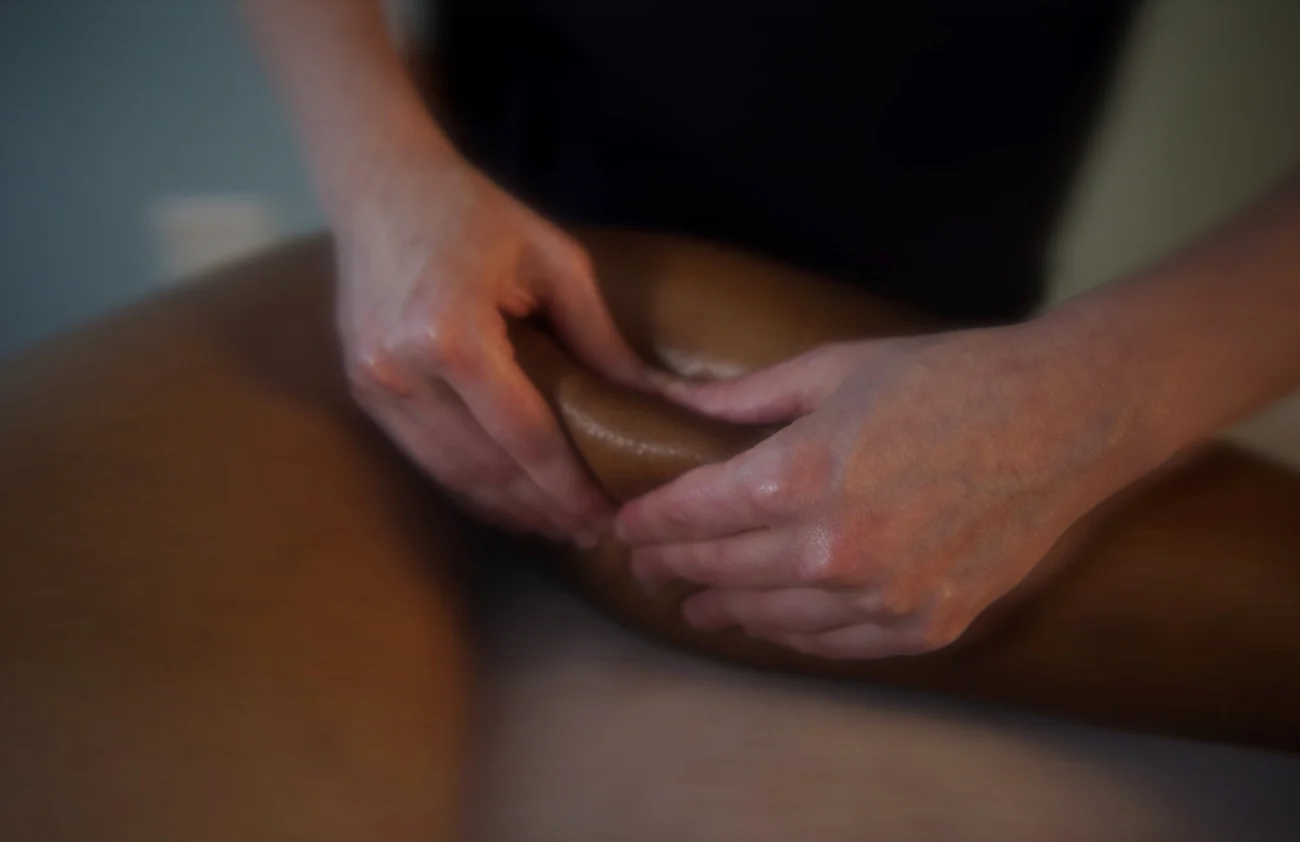
At Bodyworks DW, we help bridge that gap by restoring balanced tension through the leg, hips, ribs, and ankles so your new knee can move freely and efficiently.
Related conditions: See also our Knee Pain, ACL Post-Op, and Meniscus Tear Recovery pages.
How we treat
How Bodyworks DW Supports Knee Replacement Recovery
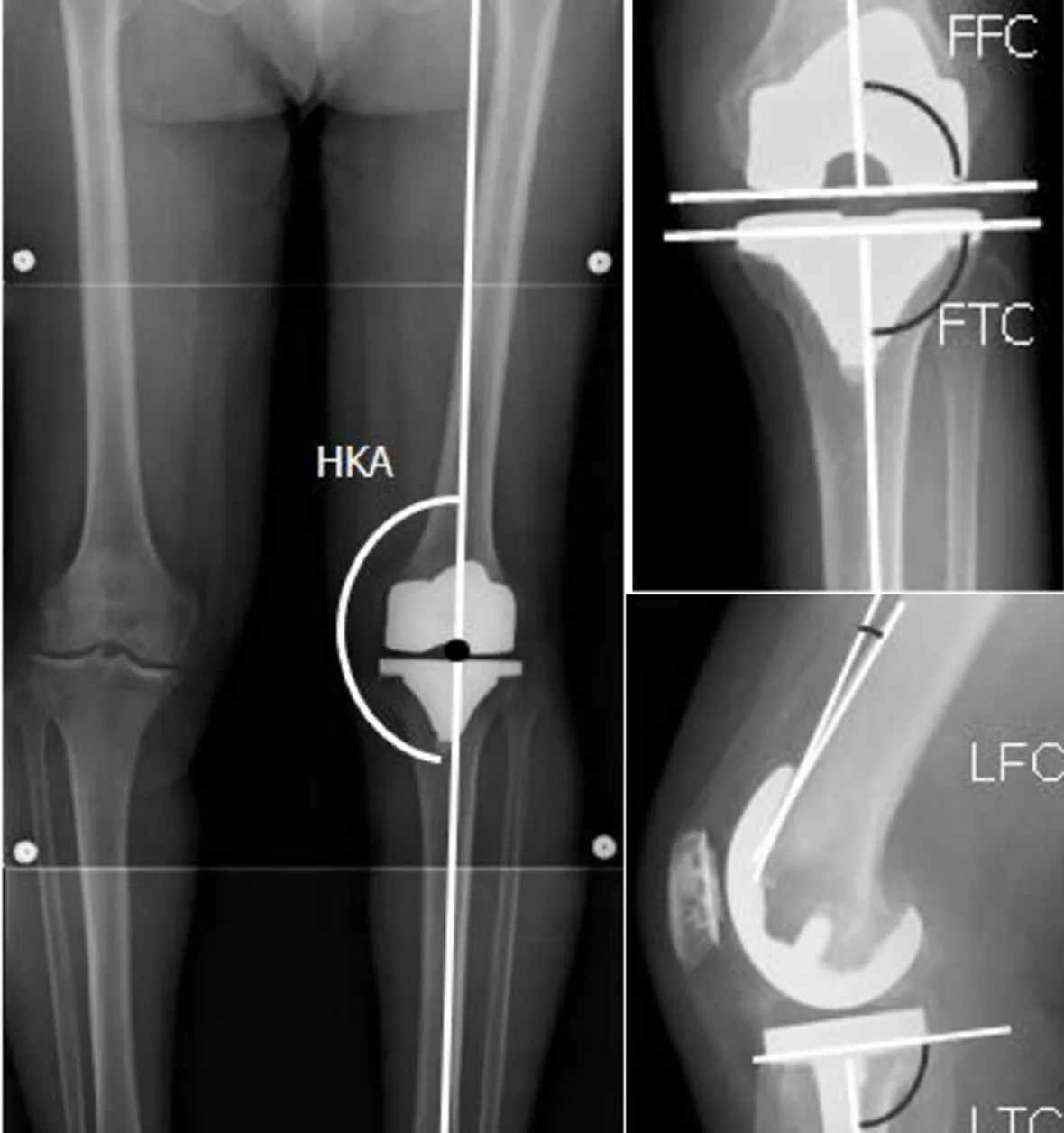
Successful knee replacement recovery depends on restoring balanced movement through the hips, ankles, and ribcage—not just the knee itself. Xray Image Credit WikiCommons
Whole-Body Evaluation
We assess hip rotation, pelvis balance, rib mobility, ankle dorsiflexion, and foot mechanics to understand what’s adding stress to your new knee.
Targeted Myofascial & Deep Tissue Work for Relief
Once cleared by your surgeon or PT, we begin by releasing tension in the hips, quads, calves, adductors, and IT band. Only when the area is ready do we work locally near the surgical site with pressure that fits your stage of healing.
For Partial Knee Replacements
The same principles apply, but timelines generally soften—less swelling, faster mobility gains, and earlier progress into full‑chain integration.
Progressive Plan That Builds on Each Session
As mobility increases, we integrate hips, ribs, ankles, and gait mechanics to create smooth whole‑body movement patterns that support long‑term recovery.
We coordinate our work with your PT
PT builds strength and stability. Our role is to improve tissue glide, reduce guarding, restore mobility between sessions, and prevent the compensations that slow PT progress. Our sessions will accelerate your recovery with noticeable improvement in range of motion after each that you then work through in PT to hold onto until our next appointment.
What to Expect
A Progressive Plan
Session 1
Reduce tension in hips, quads, calves, adductors, and ankles to ease pressure on the knee. Expect gentler bending, less stiffness, and easier weight bearing.
Sessions 2–4
Reinforce knee mobility by improving ribcage rotation, pelvic balance, and ankle mechanics—key elements for restoring a clean walking pattern.
Sessions 5–12+
As PT begins tapering (often due to insurance “plateau” rules), we increase focus on whole‑chain integration—hips, ribs, feet, and gait sequencing—to help solidify long‑term stability and prevent reinjury.
Ready to start feeling better?
Book a session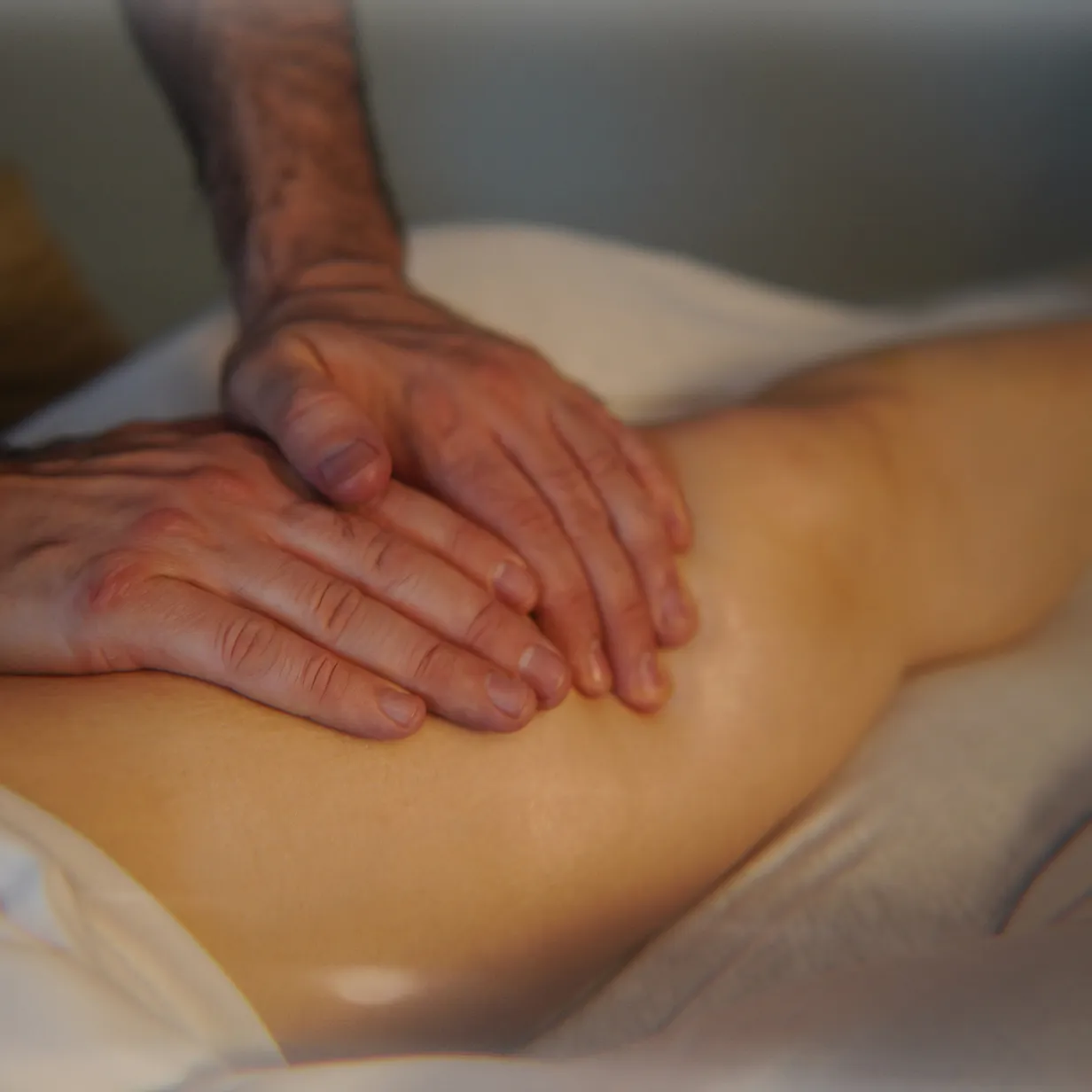
Care
Home Care That Helps Between Sessions
We’ll provide simple, effective practices such as:
- Quad, hamstring, and calf mobility resets
- Gentle, PT‑aligned isometrics
- Ankle dorsiflexion drills for gait symmetry
- Rib expansion and breathing resets
- Foot and arch‑activation strategies

Testimonial
What Our Clients Say
Pricing & wellness wallets
Book now. Pay after.
Save up to 20%.
Pay after your session—no prepay.
New here? Select “New Client Massage” to get $25 off your first visit.
Add a Wellness Wallet before your first session or within 7 days after to get up to 20% bonus credit.
START HERE
Book your session
No prepay—card on file to hold; pay after your session. New here? Choose “New Client Massage” when booking to get $25 off your first visit with select therapists.
Senior
Lead
Owner
60 minutes
$160
/ with Senior Therapist
90 minutes
$230
/ with Senior Therapist
First wallet bonus
Save with Wellness Wallets
First time buying a Wellness Wallet? You qualify for our best bonus. New to Bodyworks? Buy before your first session to use it on that visit.
$800
Get $120 bonus
Covers ~3–5 sessions
15% bonus credit
$1400
Get $250 bonus
Covers ~5–10 sessions
17.5% bonus credit
$3000
Get $600 bonus
Covers ~12–22 sessions (Annual plan)
20% bonus credit

Frequently Asked Questions
Have more questions? Get in touch
When can I start massage after knee replacement?
Typically once your surgeon or physical therapist clears you—often around 6–12 weeks depending on healing. We tailor pressure and techniques to your stage of recovery.
Is massage safe for partial knee replacements and robotic‑assisted procedures?
Yes. These procedures often recover faster, and massage helps maintain mobility and prevent compensatory strain.
What makes Bodyworks DW’s approach different?
We integrate the entire kinetic chain—hips, ribs, ankles, gait mechanics—not just the replaced joint. This helps your knee move more naturally and reduces stress above and below the joint.
How many sessions will I need?
Most clients experience meaningful improvements within 1–3 sessions, with long‑term recovery built over 8–16 sessions, especially as PT tapers.
Are there precautions for post‑surgical knee massage?
Yes. We avoid direct work over unhealed incisions and adjust pressure for swelling, medical conditions, and medications that affect tissue integrity.
Full list: NYS Massage Therapy Precautions