
Conditions We Treat
Massage for Frozen Shoulder (Adhesive Capsulitis) in NYC
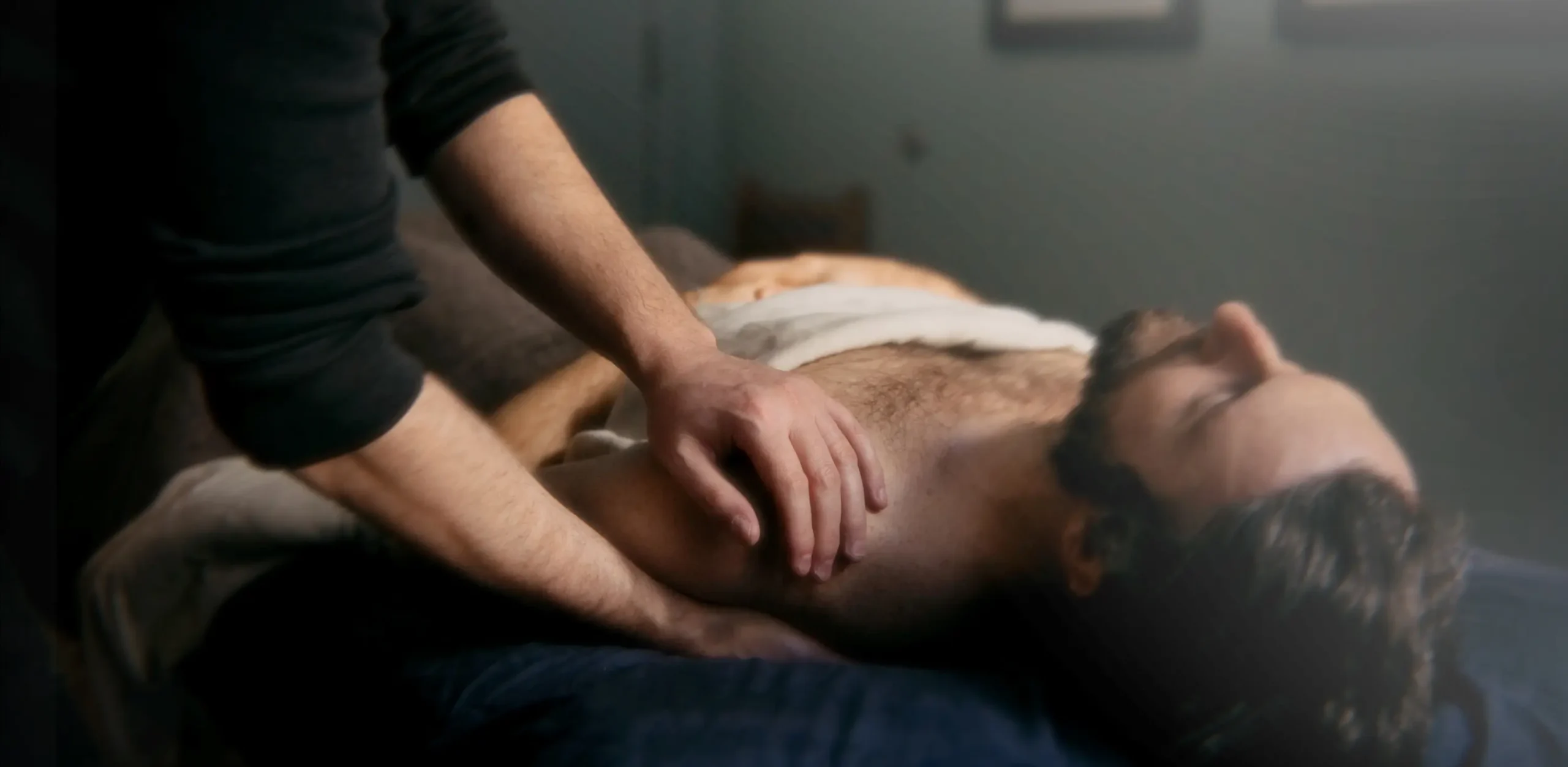
Frozen shoulder can make even simple movements—like reaching for a cabinet, putting on a jacket, or lifting your arm—painful and nearly impossible. Our licensed medical massage therapists help reduce inflammation, restore motion, and rebalance the whole body so the shoulder can move again without strain.
- Available in FiDi & Midtown West – open 7 days a week
Causes
What’s Going On With Frozen Shoulder?
- Frozen shoulder affects 2–5% of the population, most commonly adults ages 40–60, especially women and those with diabetes or thyroid issues (StatPearls–NIH 2025).
- It occurs when the shoulder capsule becomes inflamed and stiff, sharply limiting range of motion.
- The condition progresses through three phases: Freezing (pain rising, motion decreasing), Frozen (severe stiffness), and Thawing (mobility returning).
- Restrictions in the ribs, neck, thoracic spine, and hips can worsen the limitation by constantly pulling on the shoulder complex.
- Even after medical treatment, persistent stiffness often comes from long-standing postural and movement tension—not just the capsule itself.
At Bodyworks DW, we address frozen shoulder as a whole-body coordination issue. By restoring movement through the ribs, neck, diaphragm, hips, and spine, we reduce the strain on the shoulder so it can begin to regain motion.
Related conditions: See also our Shoulder Pain, Biceps Tendonitis & SLAP Tear, and Upper Back Pain pages.
How we treat
How Bodyworks DW Treats Frozen Shoulder
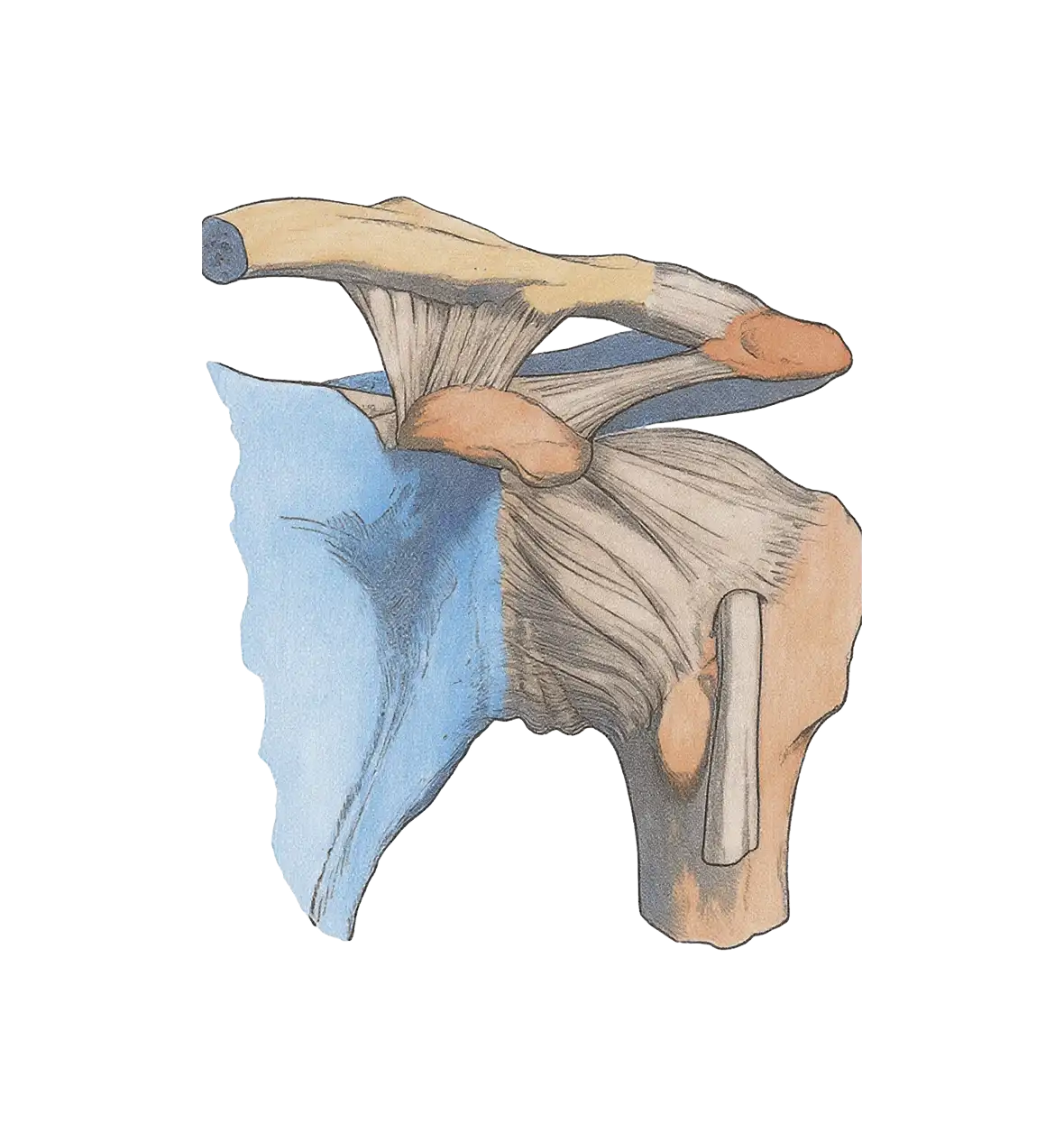
Frozen shoulder involves inflammation and tightening of the joint capsule, but restoring rib, neck, and spinal movement is key to helping the shoulder regain mobility. Anatomy Plate (Gray’s, 1918)
Whole-Body Evaluation
We assess rib mobility, neck tension, diaphragm movement, and shoulder blade mechanics to understand what’s pulling on the shoulder joint.
Targeted Myofascial & Deep Tissue Work for Mobility
The first half of the session focuses on releasing global tension patterns—ribs, diaphragm, pecs, lats, hips—to reduce strain on the capsule. Once slack is created, we gradually address the muscles directly around the shoulder joint using techniques matched to your tolerance.
Progressive Plan That Builds on Each Session
As mobility returns, we integrate full-body mechanics—ribs, shoulder blade, spine, hips, and feet—to help the shoulder move cleanly without re-triggering inflammation.
What to Expect
A Progressive Plan
Session 1
Reduce strain by releasing ribs, diaphragm, and chest to create space for the shoulder to begin moving again. Expect noticeable improvements in both comfort and mobility.
Sessions 2–6
Slowly expand work through the shoulder blade, spine, and hips to restore coordinated movement and reduce the guarding that reinforces stiffness in coordination with your PT work. This is one of the few issues we work on where we will need to repeat much of the same work from session 1 during each subsequent session and add in long chain fascial work much more slowly.
Note: Frozen shoulder tends to be highly protective and open up more slowly than other issues and needs more repetitive work. We recommend a cadence of PT 2-3x per week and a session with us 1x every 2-3 weeks.
Sessions 7–12+
Reinforce whole-body alignment—feet, hips, ribs, shoulders, neck, and jaw—to support long-term recovery and help prevent recurrence. This can be done with even longer time between sessions, as long as PT sessions are there to fill in the gaps.
Ready to start feeling better?
Book a session
Care
Home Care That Helps Between Sessions
We’ll teach you simple, effective exercises such as:
- Pendulum swings (gentle joint decompression)
- Rib expansion breathing
- Pec and lat mobility work
- Gentle isometrics for the rotator cuff
- Scapular glide drills

Testimonial
What Our Clients Say
Pricing & wellness wallets
Book now. Pay after.
Save up to 20%.
Pay after your session—no prepay.
New here? Select “New Client Massage” to get $25 off your first visit.
Add a Wellness Wallet before your first session or within 7 days after to get up to 20% bonus credit.
START HERE
Book your session
No prepay—card on file to hold; pay after your session. New here? Choose “New Client Massage” when booking to get $25 off your first visit with select therapists.
Senior
Lead
Owner
60 minutes
$160
/ with Senior Therapist
90 minutes
$230
/ with Senior Therapist
First wallet bonus
Save with Wellness Wallets
First time buying a Wellness Wallet? You qualify for our best bonus. New to Bodyworks? Buy before your first session to use it on that visit.
$800
Get $120 bonus
Covers ~3–5 sessions
15% bonus credit
$1400
Get $250 bonus
Covers ~5–10 sessions
17.5% bonus credit
$3000
Get $600 bonus
Covers ~12–22 sessions (Annual plan)
20% bonus credit

Frequently Asked Questions
Have more questions? Get in touch
How long does frozen shoulder take to recover?
Recovery varies, but many clients see meaningful improvement in 6–12 weeks when mobility work, soft tissue treatment, and home care are combined.
Do I need imaging or a doctor's release before receiving massage?
No. Under NYS Title VIII licensure (see NY Board of Education FAQ #28), massage therapists can assess whether your symptoms are safe for massage. We refer out only when necessary.
What makes Bodyworks DW’s approach different?
We focus on the full-body factors that limit shoulder movement—rib mobility, neck tension, breath mechanics, and posture—not just the capsule.
How many sessions will I need?
Most clients feel noticeable improvement in 4–6 sessions, with longer-term structural change developing over 7–12 sessions.
Are there precautions for frozen shoulder massage?
Yes — recent injuries, acute inflammation, fever/illness, or medications affecting tissue integrity require caution.
Full list: NYS Massage Therapy Precautions