
Conditions We Treat
Massage for Cervical Disc Herniation & Spinal Stenosis Relief in NYC
Radiating arm pain, numbness, or stiffness in your neck and shoulders may point to a cervical disc or nerve compression issue. Our licensed medical massage therapists specialize in helping you move safely again—reducing pain, restoring mobility, and supporting long-term spinal health.
- Available in FiDi & Midtown West – open 7 days a week
Causes
What’s Going On With Cervical Disc Herniation & Stenosis?
- A cervical disc herniation occurs when a disc in the neck bulges or ruptures, irritating nearby nerves and causing pain, tingling, or weakness in the shoulders or arms.
- Cervical stenosis happens when the spinal canal narrows and compresses nerves or the spinal cord, often limiting mobility.
- Both conditions become more common with age. MRI studies show cervical disc degeneration in ~40% of adults in their 20s and over 90% by their 50s (PMC, 2018).
- Triggers include poor posture, repetitive strain, previous injuries (including whiplash), and muscle imbalances between the neck, shoulders, and upper back. Symptoms often worsen with long hours at a computer, driving, or high stress.
At Bodyworks DW, we know cervical disc issues rarely happen in isolation—they influence and are influenced by the whole kinetic chain. Whether you’re managing a flare-up or chronic stiffness, we focus on reducing pain, restoring alignment, and improving comfortable movement.
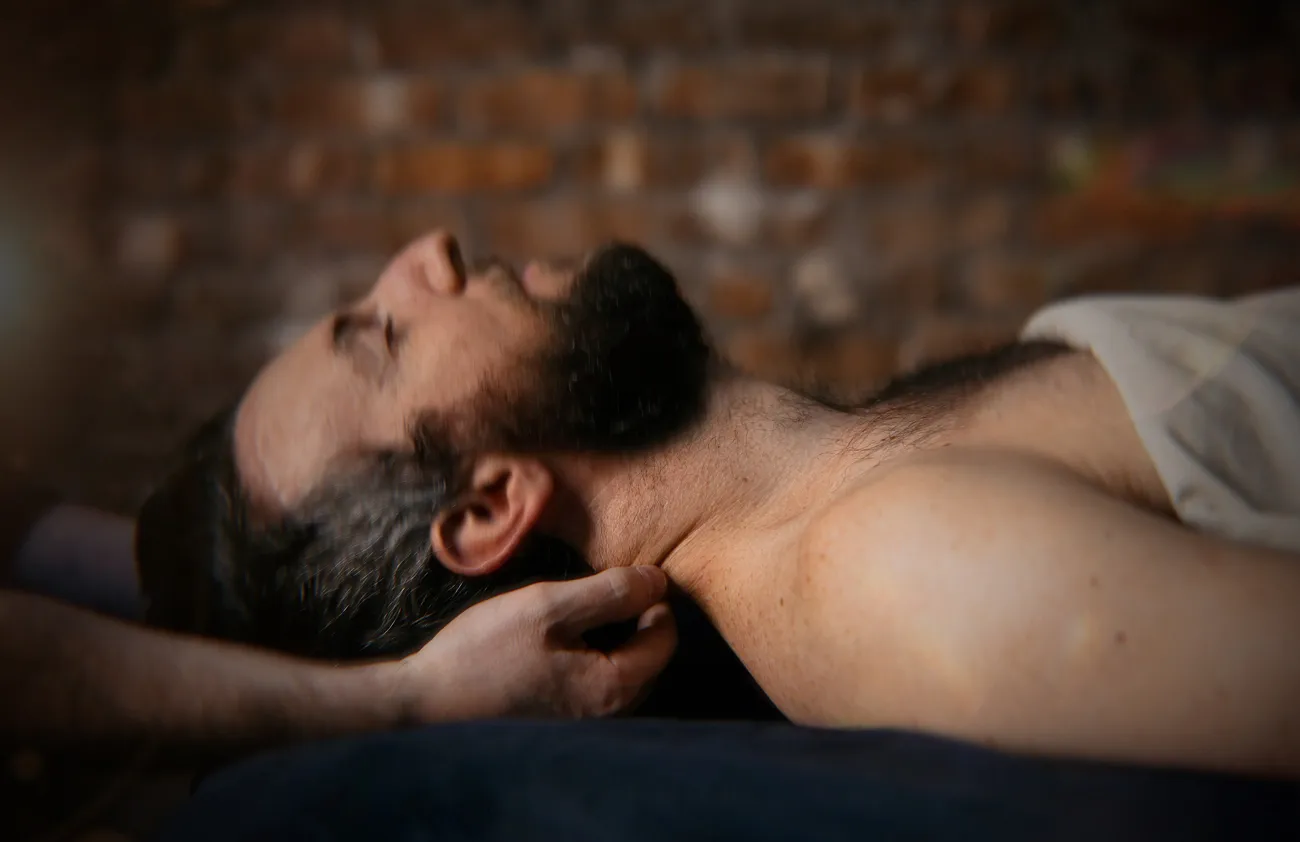
Related conditions: See also our Neck Pain, Whiplash Recovery, and TMJ Pain pages.
How we treat
How Bodyworks DW Treats Cervical Disc Herniation & Stenosis
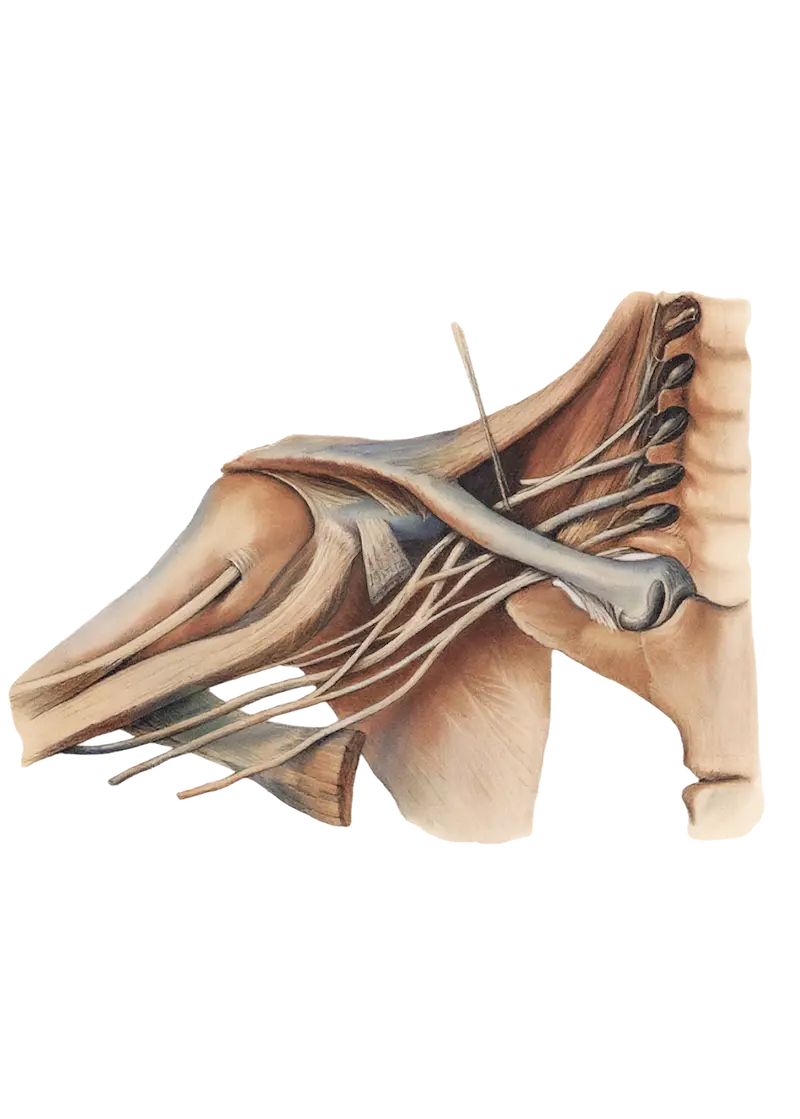
Cutaway showing cervical spine and nerve roots leading into the shoulders and arms. Herniated discs and stenosis can compress these nerves, but restoring balance in surrounding soft tissue can ease pressure and pain. Anatomy Plate (Grant 1962)
Whole-Body Evaluation
We begin by assessing how your neck, shoulders, and ribcage move together, identifying muscle imbalances or restrictions that may aggravate nerve compression. If you’ve had recent imaging, we review it to ensure treatment aligns safely with your PT or physician’s recommendations.
Targeted Deep Tissue & Myofascial Work for Immediate Relief
Sessions often begin by opening long fascial chains through the chest, diaphragm, and hips to help the neck release naturally. We then progress to focused work on the posterior and anterior neck to decompress nerve pathways.
Specialized Traction Techniques for Nerve Relief
In some cases, precise traction applied at specific angles can help reduce nerve irritation and create immediate relief. Pressure and technique are always adapted to your stage of healing and comfort level, ensuring safe, effective results.
Progressive Plan That Builds on Each Session
Over time, we broaden the focus to the ribcage, thoracic spine, hips, and feet—retraining how your body supports your neck for lasting balance. Our therapists draw from the advanced methods taught in our Head, Neck & Jaw CEU course, which includes clinically informed work on deep stabilizers like the longus colli and hyoids.
What to Expect
A Progressive Plan
Session 1
Focus on pain relief and improving mobility by decompressing neck and shoulder tension while promoting better blood flow to affected tissues.
Sessions 2–4
Incorporate ribcage, spine, and hip work to support posture and reduce compensatory strain. Begin retraining breathing and subtle movement patterns to stabilize the neck.
Sessions 5–8+
Reinforce alignment across all major joint planes—feet, knees, hips, ribs, shoulders, neck, and jaw—to create durable improvements in comfort and strength.
Ready to start feeling better?
Book a session
Care
Home Care That Helps Between Sessions
We’ll teach you straightforward, PT-approved home practices—such as chin tucks, scapular retractions, and mindful breathing—to maintain posture and reduce stress on the cervical spine. These practices are designed to complement your existing care plan.

Testimonial
What Our Clients Say
Pricing & wellness wallets
Book now. Pay after.
Save up to 20%.
Pay after your session—no prepay.
New here? Select “New Client Massage” to get $25 off your first visit.
Add a Wellness Wallet before your first session or within 7 days after to get up to 20% bonus credit.
START HERE
Book your session
No prepay—card on file to hold; pay after your session. New here? Choose “New Client Massage” when booking to get $25 off your first visit with select therapists.
Senior
Lead
Owner
60 minutes
$160
/ with Senior Therapist
90 minutes
$230
/ with Senior Therapist
First wallet bonus
Save with Wellness Wallets
First time buying a Wellness Wallet? You qualify for our best bonus. New to Bodyworks? Buy before your first session to use it on that visit.
$800
Get $120 bonus
Covers ~3–5 sessions
15% bonus credit
$1400
Get $250 bonus
Covers ~5–10 sessions
17.5% bonus credit
$3000
Get $600 bonus
Covers ~12–22 sessions (Annual plan)
20% bonus credit

Frequently Asked Questions
Have more questions? Get in touch
Is massage safe for a herniated disc or stenosis?
Yes—when performed by trained medical massage therapists. We avoid direct deep pressure over inflamed discs and focus instead on restoring mobility, circulation, and balance in the surrounding tissues.
Can massage help me avoid surgery?
Often, yes—especially when treatment is coordinated with physical therapy and medical care. Our therapists have helped many clients recover from cervical and lumbar disc herniations without surgical intervention. However, in severe cases where nerves are at risk of lasting damage, surgery may still be necessary. We’ll always advise you if we believe further imaging or a surgical consult is appropriate.
Do I need imaging before receiving massage?
No. Under NYS Title VIII licensure (see NY Board of Education FAQ #28), massage therapists can assess whether your symptoms are safe for massage. We refer out only when necessary.
What makes Bodyworks DW’s approach different?
We don’t just treat symptoms—we address the full-body mechanics that contribute to disc compression. Our approach connects the cervical spine with posture, breath, and overall movement patterns. Therapists trained in our Head, Neck & Jaw CEU course have advanced skills for accessing deep stabilizers that most practitioners miss.
How many sessions will I need?
Most clients experience measurable relief after 1–3 sessions, with long-term improvements in posture and comfort developing over 3–6 sessions.
Are there precautions for cervical herniation massage?
Yes — recent injuries, acute inflammation, fever/illness, or medications affecting tissue integrity require caution.
Full list: NYS Massage Therapy Precautions