
Conditions We Treat
Massage for Autoimmune Conditions & Inflammation Support in NYC
Autoimmune conditions don’t just affect one joint or one organ — they influence the entire nervous system, muscular system, and inflammatory response. Our licensed medical massage therapists help reduce tension, improve circulation, support mobility, and calm stress-driven flare patterns so you can move and function more comfortably.
- Available in FiDi & Midtown West – open 7 days a week
Causes
What’s Going On With Autoimmune Conditions?
- Autoimmune disorders occur when the immune system mistakenly attacks the body’s own tissues.
- More than 23 million Americans live with autoimmune disease, and some estimates suggest the number may be significantly higher. (StatPearls – NIH 2022)
- Common autoimmune conditions that affect movement and pain include:
• Rheumatoid arthritis
• Lupus
• Psoriatic arthritis
• Ankylosing spondylitis
• Hashimoto’s thyroiditis
• Multiple sclerosis
• Inflammatory bowel conditions - Symptoms often fluctuate in cycles of flare and remission.
- Chronic inflammation, joint swelling, fatigue, and nervous system hypersensitivity often coexist with muscular guarding and protective tension.
- Stress plays a major role in flare frequency and severity.
Massage therapy does not treat or cure autoimmune disease. However, it can reduce secondary tension, stress, and restrictions that worsen symptoms.
At Bodyworks DW, we help your body manage load, stress, and mobility more effectively — so you can function better between flares.
In Episode 1 of our Challenge of Being You series, we discuss Multiple Sclerosis, psoriatic arthritis, and how massage fits into complex autoimmune care.
Among these conditions, our founder David Weintraub, LMT, lives with psoriatic arthritis. That perspective informs how we approach flare cycles, fatigue management, pressure adjustments, and long-term mobility planning.
For more depth, check out David’s cover article “Massage for Clients Who Present with Autoimmune Disorders” in Massage Magazine.
Related conditions:
See also our Osteoarthritis, Chronic Stress & Burnout, and Neck & Back Pain pages.
How we treat
How Bodyworks DW Supports Clients with Autoimmune Conditions
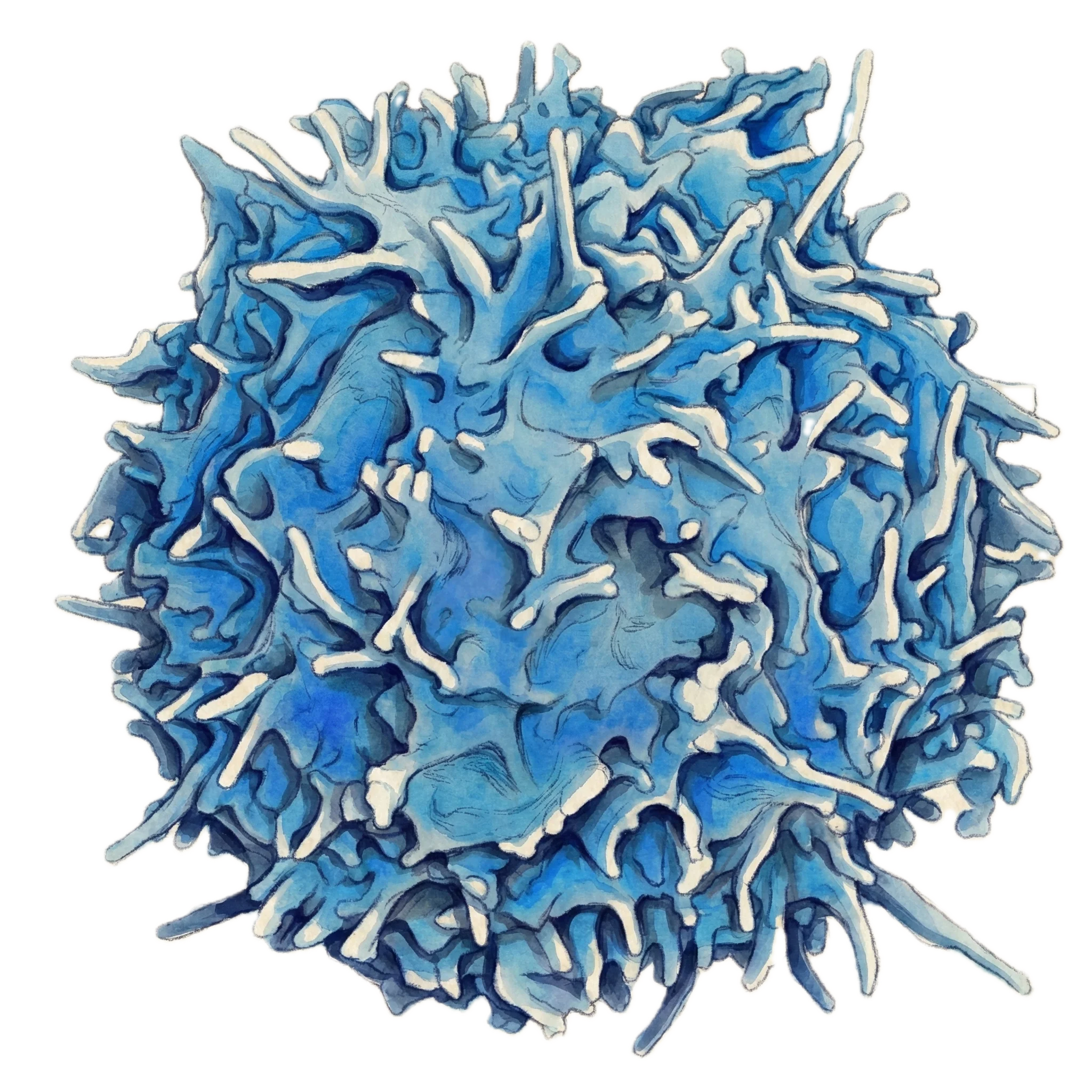
This healthy human t-cell, normally one of our best defenders, can become an unwitting foe by attacking our own tissues. Autoimmune conditions create whole-body tension patterns. Restoring mobility and calming the nervous system helps reduce symptom intensity. (NIAID/NIH 2010)
Whole-Body Evaluation
We assess joint mobility, inflammatory sensitivity, fatigue levels, breathing patterns, rib mechanics, and compensatory tension.
Inflammation-Sensitive Pressure
Techniques are adjusted based on flare stage. During active inflammation, we use lighter pressure and focus on circulation and nervous-system regulation rather than aggressive tissue work.
Stress & Nervous System Support
Because stress strongly influences autoimmune flare patterns, we integrate diaphragm work, rib mobility, and breath-based resets to support parasympathetic activation.
Joint Protection Strategy
We reduce soft-tissue guarding around affected joints while avoiding excessive pressure on inflamed areas.
Progressive Plan That Builds on Each Session
During remission phases, we gradually expand mobility through hips, ribs, spine, shoulders, and gait mechanics to improve overall resilience.
What to Expect
What to Expect — A Progressive Plan
During a Flare
Focus on gentle circulation, nervous-system calming, and reducing protective tension without aggravating inflamed tissue.
Early Remission
Improve surrounding mobility and load sharing to reduce stress on affected joints.
Maintenance Phase
Reinforce whole-body alignment — feet, knees, hips, ribs, shoulders, and neck — to maintain functional capacity and help manage stress triggers.
Ready to start feeling better?
Book a session
Care
Home Care That Helps Between Sessions
We emphasize sustainable tools rather than overwhelming exercise lists:
- Gentle mobility resets for non-inflamed joints
- Breathwork and rib expansion drills
- Pacing strategies to avoid overexertion
- Nervous-system down-regulation techniques
- Coordination with rheumatologists, PTs, and other providers

Testimonial
What Our Clients Say
Pricing & wellness wallets
Book now. Pay after.
Save up to 20%.
Pay after your session—no prepay.
New here? Select “New Client Massage” to get $25 off your first visit.
Add a Wellness Wallet before your first session or within 7 days after to get up to 20% bonus credit.
START HERE
Book your session
No prepay—card on file to hold; pay after your session. New here? Choose “New Client Massage” when booking to get $25 off your first visit with select therapists.
Senior
Lead
Owner
60 minutes
$160
/ with Senior Therapist
90 minutes
$230
/ with Senior Therapist
First wallet bonus
Save with Wellness Wallets
First time buying a Wellness Wallet? You qualify for our best bonus. New to Bodyworks? Buy before your first session to use it on that visit.
$800
Get $120 bonus
Covers ~3–5 sessions
15% bonus credit
$1400
Get $250 bonus
Covers ~5–10 sessions
17.5% bonus credit
$3000
Get $600 bonus
Covers ~12–22 sessions (Annual plan)
20% bonus credit

Frequently Asked Questions
Have more questions? Get in touch
Can massage cure autoimmune disease?
No. Most autoimmune disorders have no known cure medically, let alone through integrative therapies such as medical massage, acupuncture, or chiropractic. Most autoimmune conditions require medical management through medication. However, medical massage can usually support symptom relief, mobility, and stress regulation.
Is massage safe during a flare?
Yes, when pressure and technique are adjusted appropriately. We avoid aggressive work on actively inflamed joints.
What makes Bodyworks DW’s approach different?
We treat the entire system — joints, fascia, breath mechanics, and nervous system — while respecting inflammatory sensitivity.
How often should I come in?
Frequency varies. Many clients benefit from maintenance sessions every 2–4 weeks during stable phases and lighter sessions during flares.
Are there precautions?
Yes. Acute inflammation, medication effects, infection risk, or systemic fatigue require careful modification.
Full list: https://www.op.nysed.gov/professions/massage-therapy/precautions-massagebodywork-therapy