
Conditions We Treat
Massage for Ankle Sprains & Shin Splints in NYC
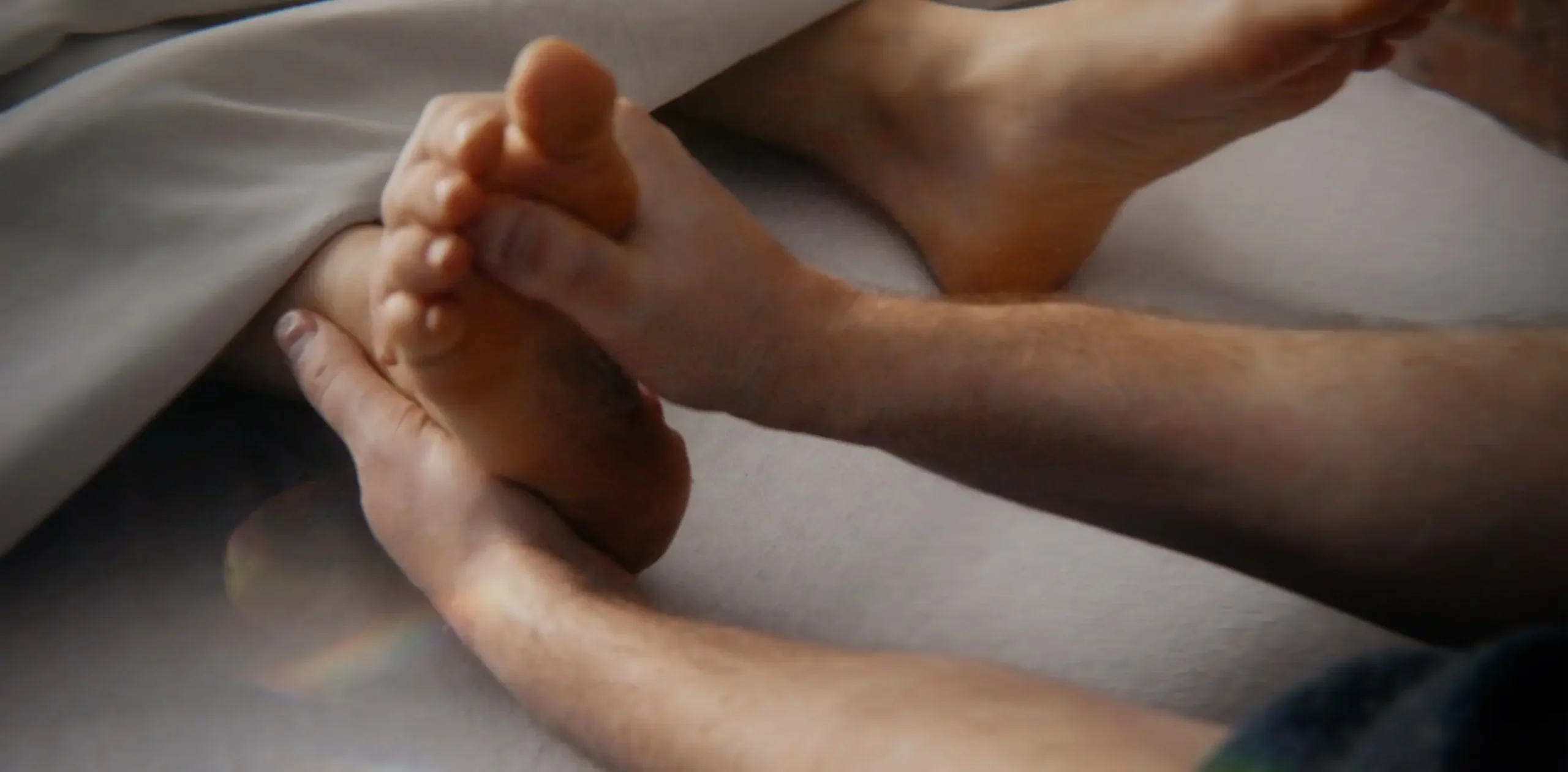
Whether you rolled your ankle yesterday or you’ve been battling shin splints for months, the real solution lies in restoring clean ankle mechanics—not just chasing the painful spot. Our licensed medical massage therapists help reduce swelling, improve mobility, and rebalance the full lower‑leg chain so you can walk, run, and train with confidence again.
- Available in FiDi & Midtown West – open 7 days a week
Causes
What’s Going On With Ankle Sprains & Shin Splints?
- Ankle sprains are among the most common musculoskeletal injuries—up to 30% of all sports injuries and an estimated 2 million cases per year in the U.S. (StatPearls–NIH 2025).
- In the acute stage (first 72 hours), ligaments are vulnerable; swelling, bruising, and limited weight-bearing are expected, and hands-on work must be minimal.
- In the subacute stage (days 4–21), guarding patterns develop: the calf tightens, the foot stiffens, and the hips begin to compensate.
- Without proper mobility retraining, many people develop chronic ankle instability, reduced dorsiflexion, and recurring sprains.
- Shin splints (medial tibial stress syndrome) usually stem from restricted ankle dorsiflexion and poor load-sharing in the lower leg.
- Tight calves, a restricted tibialis posterior, stiff feet, and hip or rib immobility increase strain on the shin.
At Bodyworks DW, we treat ankle sprains and shin splints as full-chain movement problems. Addressing the ankle alone rarely solves the issue—restoring proper mechanics from the ribs through the hips, knees, ankles, and feet is essential for lasting recovery.
Because ankle sprains are so common, the compensations they create often become root causes for knee, back, shoulder, and even neck pain. This is why foot and ankle work appears across most of our issue pages and why David designed the Myofascial Release Techniques for the Foot & Ankle CEU course.
Related conditions: See also our Plantar Fasciitis, Knee Pain, and Ankle & Foot Pain pages.
How we treat
How Bodyworks DW Treats Ankle Sprains & Shin Splints
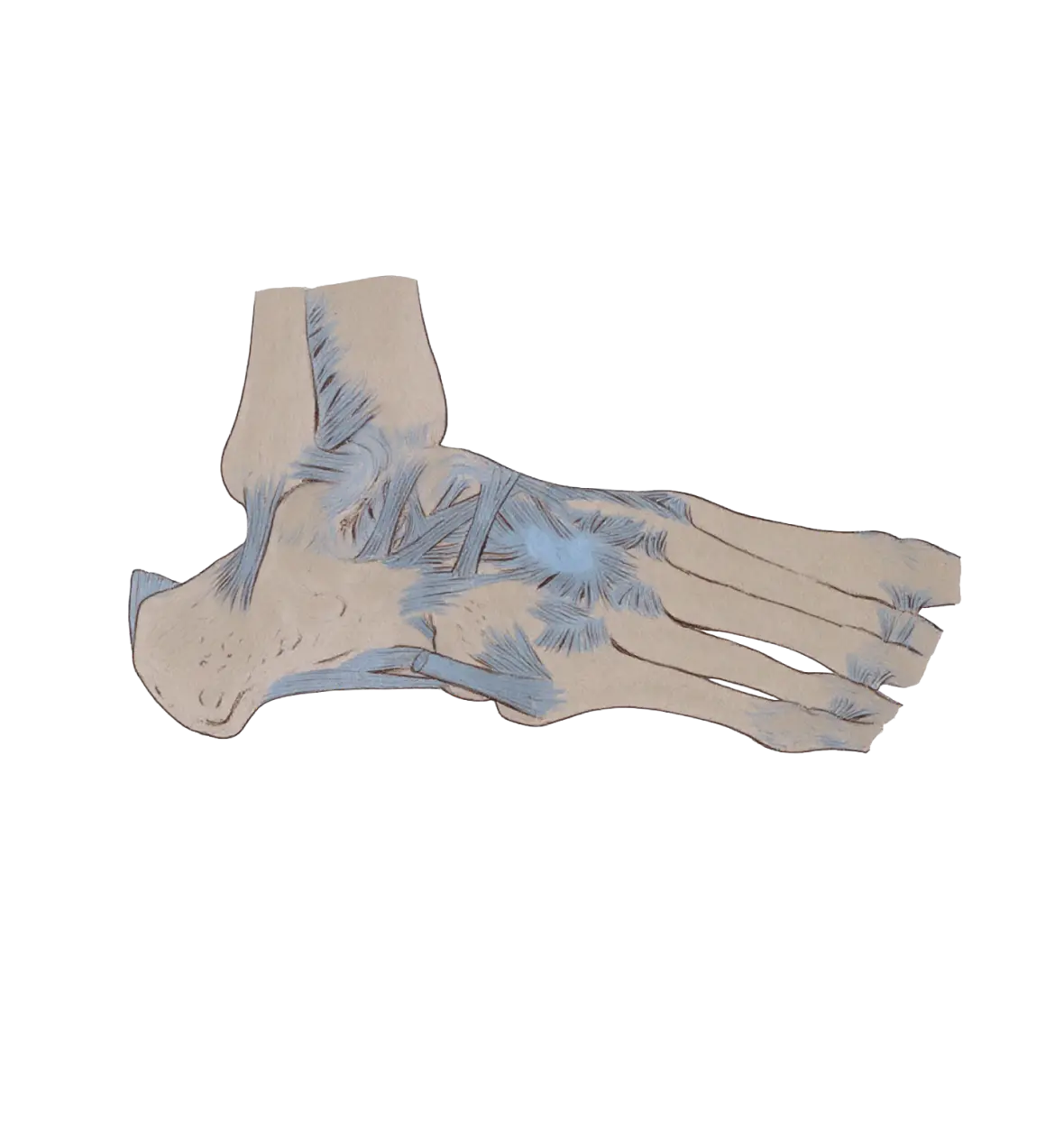
Shin splints often trace back to older ankle sprains. After a lateral sprain, the tibialis posterior tendon can get fascially adhered to the calcaneofibular ligament on the lateral portion of the calcaneus restricting its ability to slide. This will cause it to overwork and pull the shin bone sideways causing shearing forces and eventually pain. Anatomy Plate (Sobotta, 1909)
Whole-Body Evaluation
We assess ankle dorsiflexion, subtalar mobility, calf tension, hip rotation, rib motion, and gait mechanics to identify the true source of overload.
Targeted Myofascial & Deep Tissue Work for Relief
- Acute ankle sprains: No aggressive local work. We focus on lymphatic drainage, swelling reduction, and gentle mobility above and below the injury to help flush the area.
- Subacute sprains: We begin restoring ankle and foot mobility through the calves, peroneals, and tibialis posterior while supporting the healing ligament.
- Chronic sprains: We address long‑standing restrictions, scar tension, and compensatory patterns throughout the kinetic chain.
Addressing Shin Splints
As mechanics improve, we integrate hips, ribs, and gait sequencing to support efficient walking and running.
Progressive Plan That Builds on Each Session
As mobility improves, we integrate hips, ribs, foot arches, and gait mechanics to support effortless walking and long-term relief.
What to Expect
A Progressive Plan
Session 1
Reduce tension in the entire leg including the calves, foot intrinsics, and ankle restrictions for immediate improvement in comfort and overall movement. Expect less sharpness and easier weight‑bearing.
Sessions 2–4
Improve ankle and foot mechanics with hip, rib, and gait integration to reduce repetitive strain on both the shin and the ankle.
Sessions 5–8+
Reinforce whole‑body alignment—from the feet up through the knees, hips, ribs, shoulders, and head—to maintain lower‑leg balance and prevent recurrence.
Ready to start feeling better?
Book a session
Care
Home Care That Helps Between Sessions
We’ll teach simple, effective strategies such as:
- Calf and Achilles mobility resets
- Tibialis posterior self release techniques
- Ankle dorsiflexion drills and wobble‑board training
- Foot intrinsic and arch‑activation work
- Bracing or kinesio tape for support while healing

Testimonial
What Our Clients Say
Pricing & wellness wallets
Book now. Pay after.
Save up to 20%.
Pay after your session—no prepay.
New here? Select “New Client Massage” to get $25 off your first visit.
Add a Wellness Wallet before your first session or within 7 days after to get up to 20% bonus credit.
START HERE
Book your session
No prepay—card on file to hold; pay after your session. New here? Choose “New Client Massage” when booking to get $25 off your first visit with select therapists.
Senior
Lead
Owner
60 minutes
$160
/ with Senior Therapist
90 minutes
$230
/ with Senior Therapist
First wallet bonus
Save with Wellness Wallets
First time buying a Wellness Wallet? You qualify for our best bonus. New to Bodyworks? Buy before your first session to use it on that visit.
$800
Get $120 bonus
Covers ~3–5 sessions
15% bonus credit
$1400
Get $250 bonus
Covers ~5–10 sessions
17.5% bonus credit
$3000
Get $600 bonus
Covers ~12–22 sessions (Annual plan)
20% bonus credit

Frequently Asked Questions
Have more questions? Get in touch
How long does it take to recover from an ankle sprain?
Mild sprains may recover in a few weeks, while moderate to severe sprains can take several months. Restoring ankle mobility on the shortened side and addressing compensations above and below the joint dramatically speeds recovery.
Why do shin splints keep coming back?
Most shin splints come from poor ankle dorsiflexion and restricted subtalar mechanics—not the shin itself. When these aren’t addressed, the problem tends to return.
Do I need imaging or a doctor's release before receiving massage?
No. Under NYS Title VIII licensure (see NY Board of Education FAQ #28), massage therapists can assess whether your symptoms are safe for massage. We refer out only when necessary.
What makes Bodyworks DW’s approach different?
We target the real root causes—ankle and subtalar restrictions, calf imbalance, hip mechanics, and gait patterns—not just the painful shin or sprain site.
How many sessions will I need?
Many clients notice improvement in 1–3 sessions, with deeper recovery over 5–8 sessions.
Are there precautions for post‑surgical knee massage?
Yes. Acute swelling, unhealed ligament tears, nerve involvement, or medications affecting tissue integrity require modified pressure.
Full list: NYS Massage Therapy Precautions