What is the most common pain issue you see in clients?
Neck and shoulder pain still wins for pain issues by a nose. It’s the unofficial NYC uniform: hours at a laptop, hours on the phone, hours pretending we’re not sitting like a shrimp. A close runner-up is lower back pain—often driven by tight hip flexors and weak support through the front body.
The funny thing? These two “different” issues are usually the same story told in two different places. When the front of the body shortens from long bouts of sitting, the entire spine loses its ideal support system. For some people, that stress shows up in the low back. For others, it punches them right in the neck and shoulders.
If you’re curious how clinicians think about desk-related pain as a whole — not just tight muscles — I recently wrote a bylined article for Featured.com outlining a clinical approach to desk pain that expands on this idea.
How do you work to correct these issues?
First question we ask ourselves: “Where’s the real cause?”
(It’s almost never where the client feels it.)
With neck and shoulder pain, we often see a classic pattern: the head gets pulled forward by tight hip flexors and abdominal muscles. Once that happens, your body starts making… let’s call them “interesting” choices to keep your skull upright.
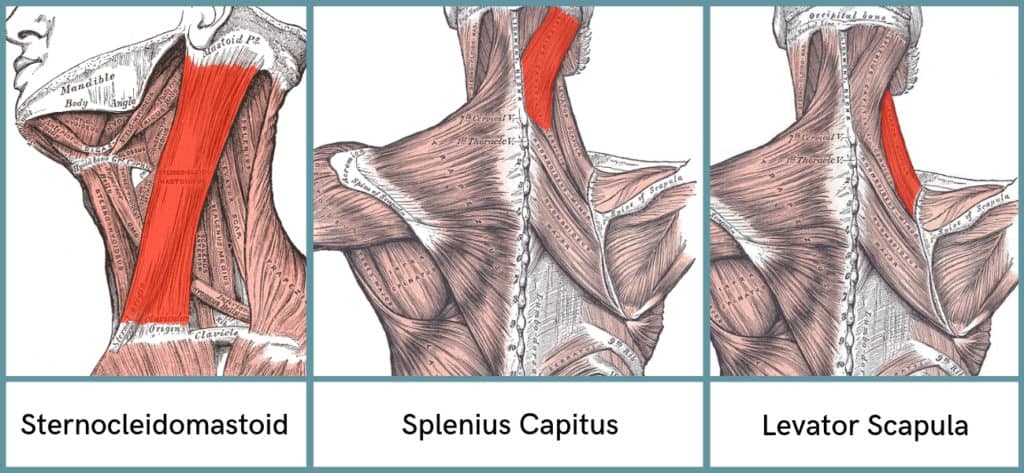
Ideally, your head is balanced by a muscular sling between the sternocleidomastoid (SCM) in the front and the splenius capitis in the back—both anchored on stable structures. But when your head drifts forward, the body recruits the levator scapulae to help out. Unfortunately, levator attaches to one of the most mobile bones in the body (the shoulder blade). It’s like trying to stabilize a wobbly bookshelf by leaning on a rolling chair—technically possible, deeply unwise.
And yes, the lower attachment of levator often feels like it’s shouting for help. If that’s you, hi and welcome, you’re in good company.
If those muscle names mean nothing to you, scroll down—there are diagrams.
Our treatment approach always starts broad, then narrows:
-
Release the front of the thighs and hip flexors to create slack in the whole chain.
-
Lengthen the vertical abdominals, so the ribcage and pelvis can re-orient.
-
Then work the front of the neck, once the rest of the system is ready to let go.
If we skip that prep work? Change won’t stick. Clients might feel better for a few hours, then return to the same patterns.
Homework often includes: quad stretching, abdominal opening, dynamic shoulder mobility, and yoga poses like pigeon and cobra to keep the anterior myofascial lines long. A little consistency here goes a very long way.
Don’t know what all those anatomy terms mean? See images below 👇
Do you have a favorite area to work on? What do you like about it?
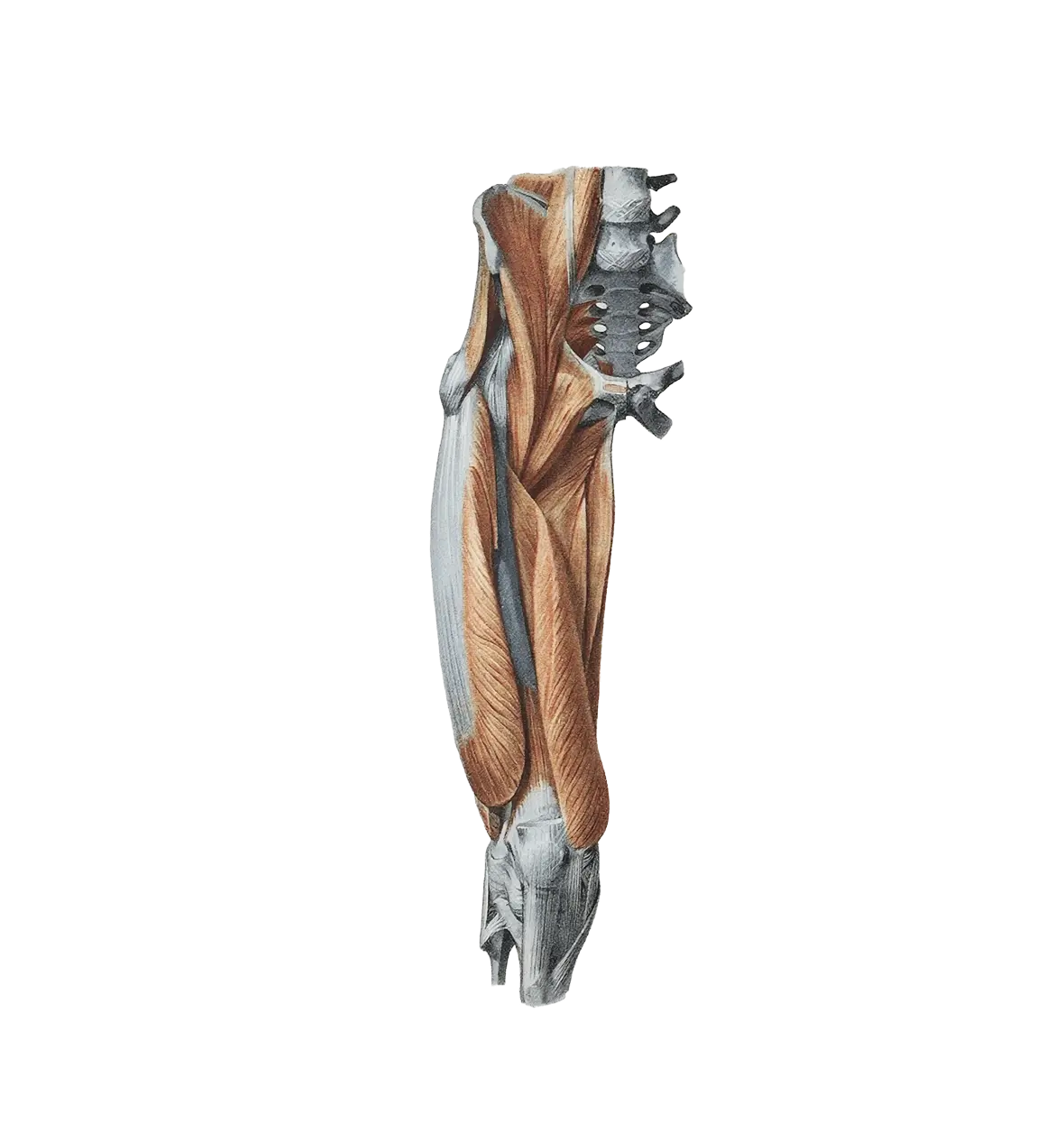
The hips. Forever and always.
When the pelvis is even slightly out of position, the whole body starts making compromises. Releasing the hip flexors, deep rotators, QL, and the tissues between pelvis and lumbar spine can bring massive relief—fast. And since the pelvis is the body’s center of gravity, helping someone change how they stand and move can shift everything upstream and downstream.
Honestly, we love it when people walk out of here so changed that they don’t need us anymore (at least not until they want a tune-up or maintenance session). That’s the good stuff.
Here’s a quick video on how to relax your psoas muscles which will help a bunch with hip flexor tightness:
Do you have a favorite massage therapy success story?
One that stays with us: a client with chronic, debilitating migraines.
During her intake, she mentioned a long history of falls and jolts to her neck and shoulders. Over time, the muscles at the base of her skull had become hyper-reactive—spasming, clamping, and setting off migraine cycles.
Migraines are complex and deeply individual, but targeted, consistent manual therapy can dramatically reduce the frequency and intensity of symptoms. After six months of regular treatment, she went from near-daily migraines to about one a month. After a year, she was down to one every two months—and she’d started working out again.
Her whole personality changed as her pain lifted. Early on she could barely get through the door without wincing. Now she arrives smiling. That transformation—from survival back to living—is why we do this work.